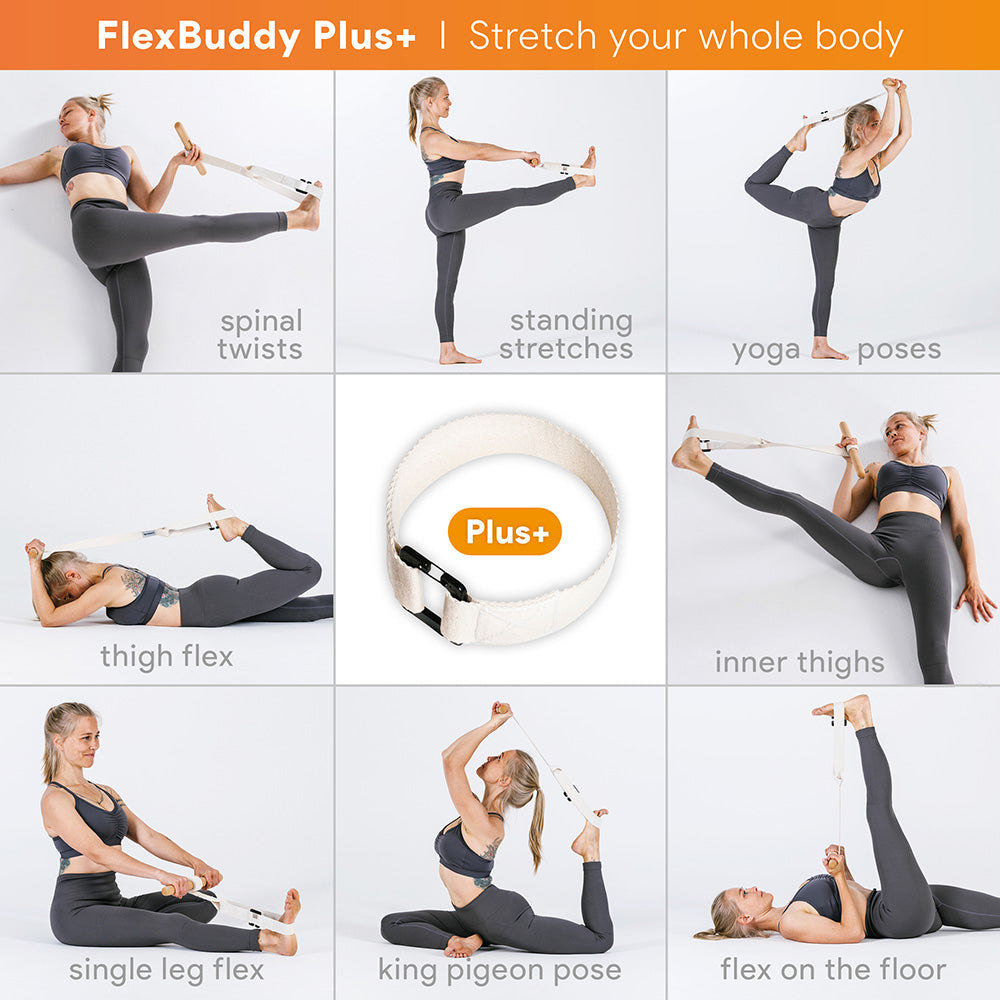
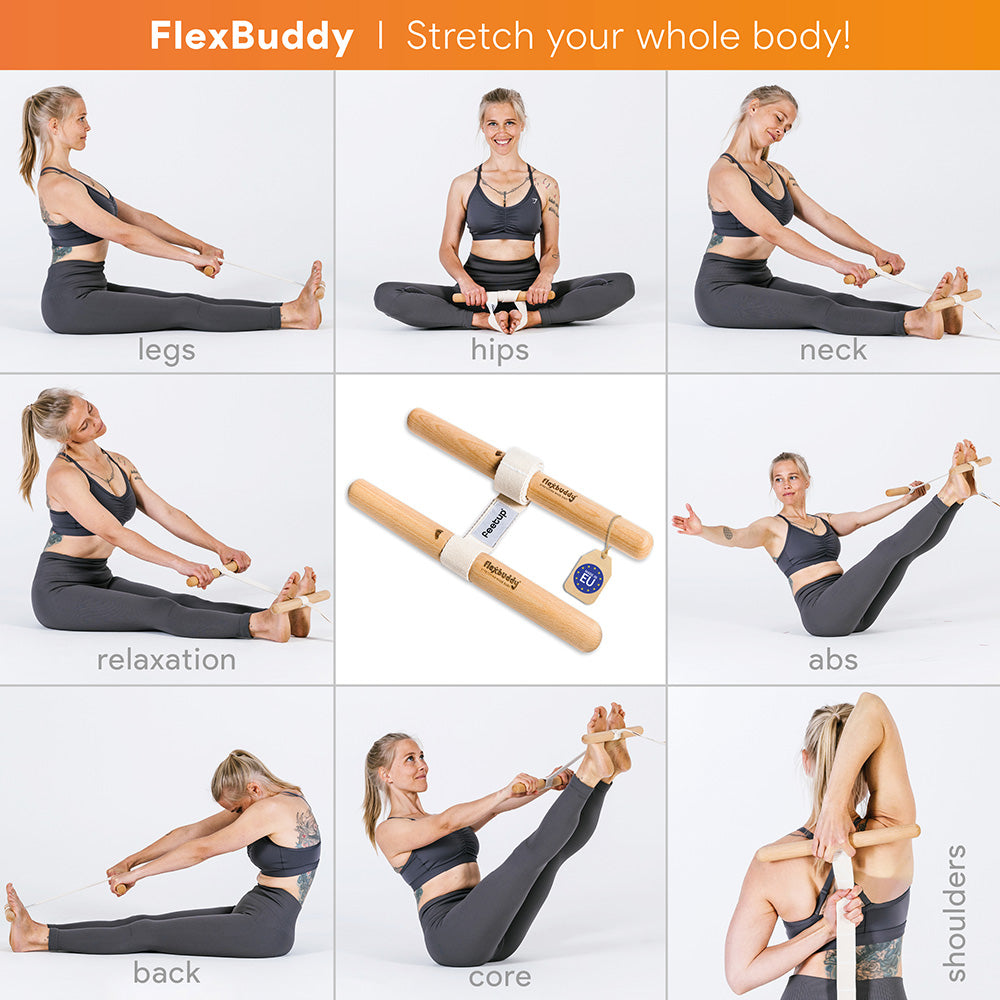
- Fold at the hips and the stretch lands in your hamstrings. Rounding the lower back to reach further is the most common mistake, and a long spine fixes it at once.
- Arrive slowly and hold still. Bouncing is no longer recommended because of the injury risk [1].
- Tension, never pain [2]. Early gains come mostly from tolerance, not from longer muscle [3], so comfortable is also quick.
- Two minutes is a real dose. The guideline is about 60 seconds per muscle group on at least two days a week [4], in holds of 10 to 30 seconds [1].
- Before sport, keep holds short. Under 60 seconds per muscle group the performance cost is about 1% [5].
- Know a nerve from a muscle. Burning, tingling or numbness down a leg is a nerve, not a tight muscle [6]. Stop and get it checked.
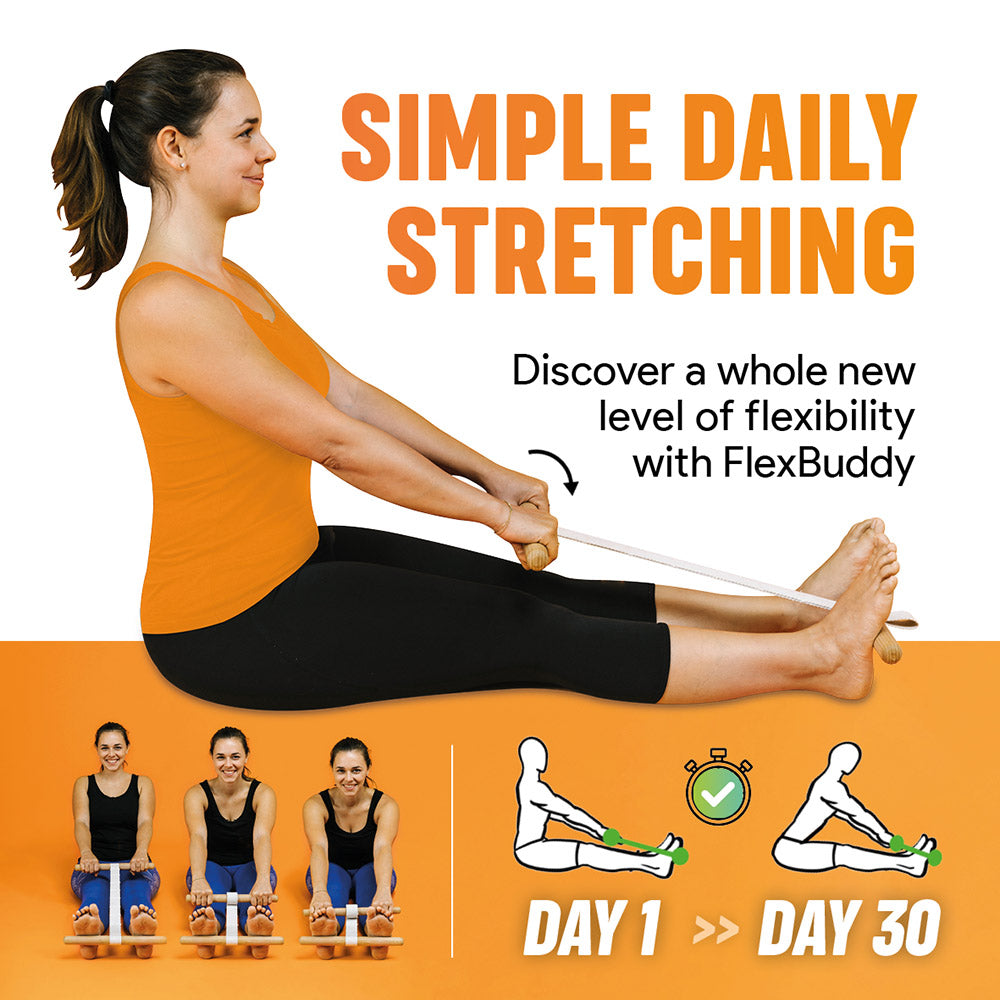
- FlexBuddy® handles the first mistake for you. The strap covers the distance to your feet, so your back stays long and the stretch reaches your hamstrings and calves.
Mistake 1: rounding your lower back to reach further
Fix this one and you feel it in the first half-minute: the pull leaves your back and arrives in your thighs. Ask someone to stretch their hamstrings and most will reach for the toes, curl the spine and pull. It looks deep. Most of it is happening in the wrong place.
What a long spine does for the stretch
The hamstrings are three muscles on the back of the thigh. They start on the ischial tuberosity, the bony point of the pelvis you sit on, and attach just below the knee [7]. Because they anchor on the pelvis, they lengthen only when the pelvis tips forward over the thighs. Curl your spine and the pelvis stays where it was: your hands travel further, your hamstrings do not. Tip the pelvis with a long spine and the whole movement goes into the muscle.
It is also why your toes are the wrong target. In a meta-analysis of 34 studies, sit-and-reach scores were only moderately related to hamstring extensibility (correlations of 0.46 to 0.67) and weakly to lumbar extensibility (0.16 to 0.35) [8]. So measure by where you feel it, not by reach.
What the laboratory shows about your discs
The second argument concerns the discs between the vertebrae, each a soft nucleus held in by rings of tough fibre, the annulus. When 52 cadaver lumbar segments were loaded repeatedly in compression and bending, six discs prolapsed gradually [9]. Pig spine segments herniated at the back of the disc with only modest compression but highly repetitive flexion and extension [10]. And in 87 human discs, age-related degeneration shifted load onto the annulus, where peaks of compressive stress rose by 160% [11].
These are spine segments on machines, so the lesson is specific: avoid end-range bending that is repeated, loaded or forced, such as bouncing toe-touches, folds with a weight in the hands or hauling yourself down by the arms. Ordinary bending is fine: the same researchers concluded that flattening the lumbar curve has advantages, including less stress on the facet joints and better transport of nutrients in the disc [12].
The right way: hinge at the hips, keep the spine long
- Sit tall first. Legs straight, on a folded towel if your pelvis rolls backwards. Chest lifted.
- Fold from the hip crease. Navel towards thighs, not nose towards knees.
- Stop where the thighs pull and the spine is still long. That will be far from your toes. It is the correct position.
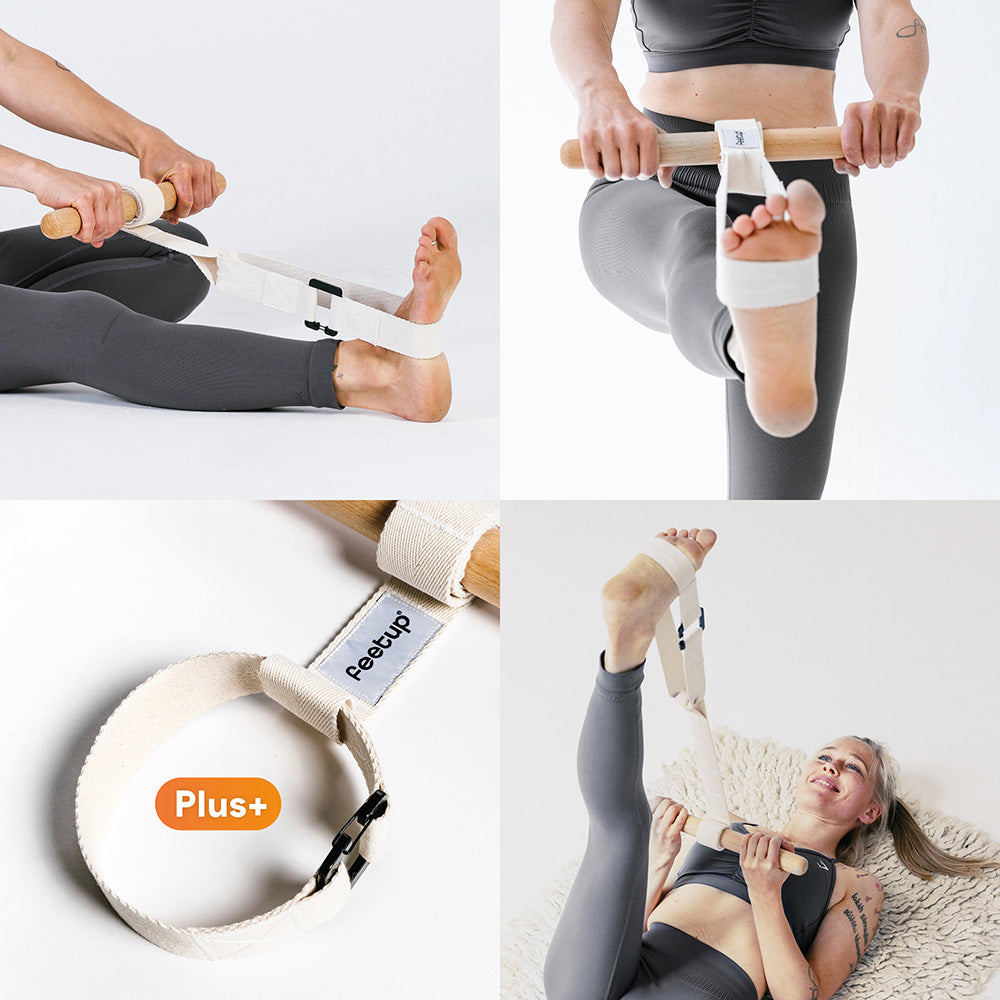
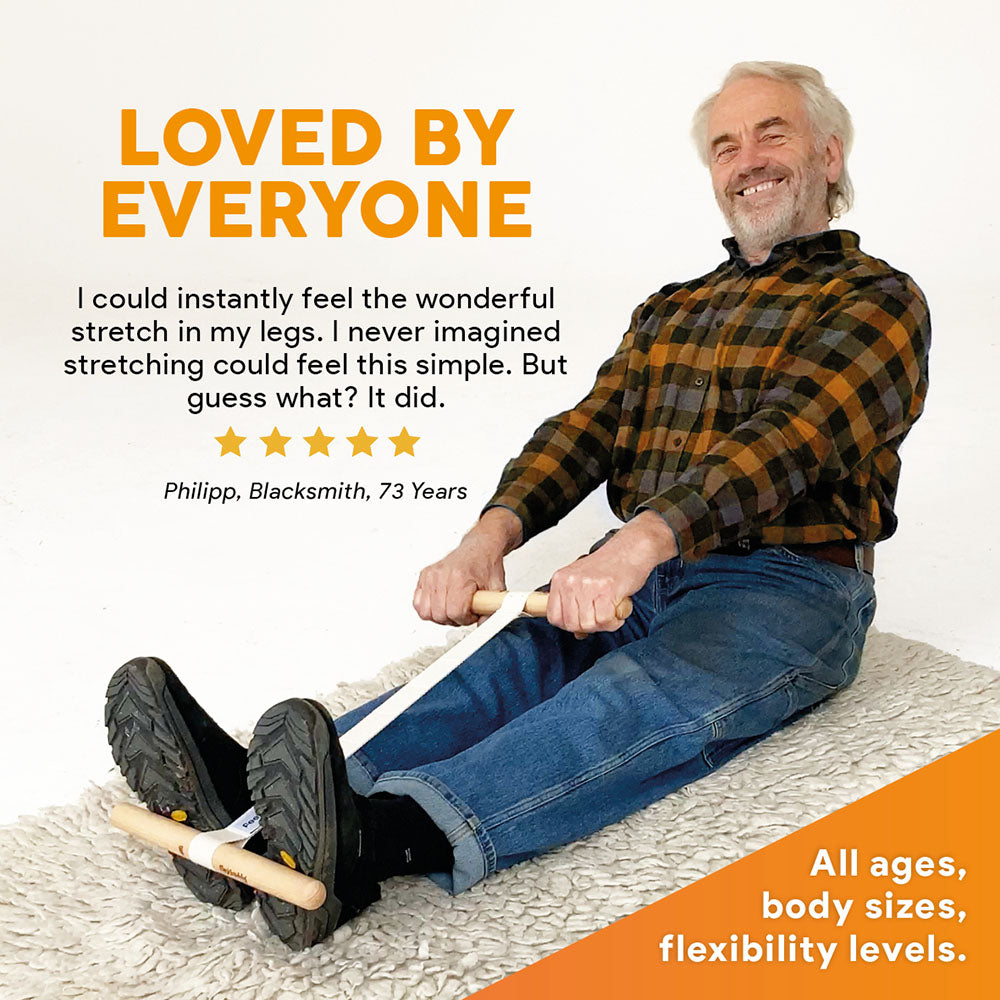
- Give your hands something to hold. FlexBuddy, a strap or a towel around the feet removes the need to reach, and with it the temptation to round. With FlexBuddy you hold a wooden bar with straight arms and sit tall while the strap covers the distance.
- Stay for ten slow breaths, then repeat.
A quick check: put a hand on your lower back as you fold. If it bulges backwards, you have run out of hip and started borrowing from the spine. Slightly bent knees are fine while you learn. The full routine is in the guide to tight hamstrings and lower back pain.
Mistake 2: bouncing at the end of the stretch
Stillness is where a stretch does its work. Bouncing has a technical name, ballistic stretching: rapid, alternating movements at the end of the range of motion. It is no longer recommended because of an increased risk of injury [1], and Mayo Clinic adds that bouncing can injure the muscle and contribute to tightness [2]. The usual explanation is the stretch reflex: a muscle pulled quickly tightens against the pull, so each bounce meets a contracting muscle. Arrive slowly and the muscle lets you in.
Bouncing is not dynamic stretching, the controlled leg swings and lunges of a warm-up. Dynamic stretching came with a performance gain of 1.3% in one systematic review [5].
The right way: move into the stretch over three or four seconds, stop at the first firm pull and stay still. Never use momentum to get past the point where the muscle stops you.
Mistake 3: holding your breath
Your breath is the best stretching tool you own. At the edge of a stretch the breath stops, the shoulders rise, the jaw sets. That is bracing. Holding the breath against a closed throat is the Valsalva manoeuvre, which lifters use to stiffen the trunk under a heavy bar: a research review found that it raises pressure inside the abdomen and is associated with a rise in blood pressure during resistance exercise [13]. Rigidity is the last thing a stretch needs. Breathe normally while you hold [2].
The right way: count breaths instead of seconds. Ten slow breaths is about half a minute, and it works as a brake: if you cannot breathe slowly and quietly, you are too deep.
Mistake 4: stretching too hard, because pain feels like progress
Stretching works best when it feels good. Many believe it has to hurt. Guidance says the opposite: expect tension, not pain, and if it hurts, back off to the point where it does not, then hold there [2].
How hard is hard enough? A systematic review went through 152 stretching studies with intensity in mind [14], and one laboratory study answers it clearly: the stretch held at maximum intensity without pain increased knee range, and gentler stretches held for longer did not [15].
The gains of the first weeks are mostly not a longer muscle: the extra range after a single session and after three to eight weeks of stretching is best explained by modified sensation, a higher tolerance to the stretch [3]. You are teaching your nervous system to accept a position, and it learns fastest when it feels safe. One exception: leave a strained muscle alone, because stretching it may cause further harm [2].
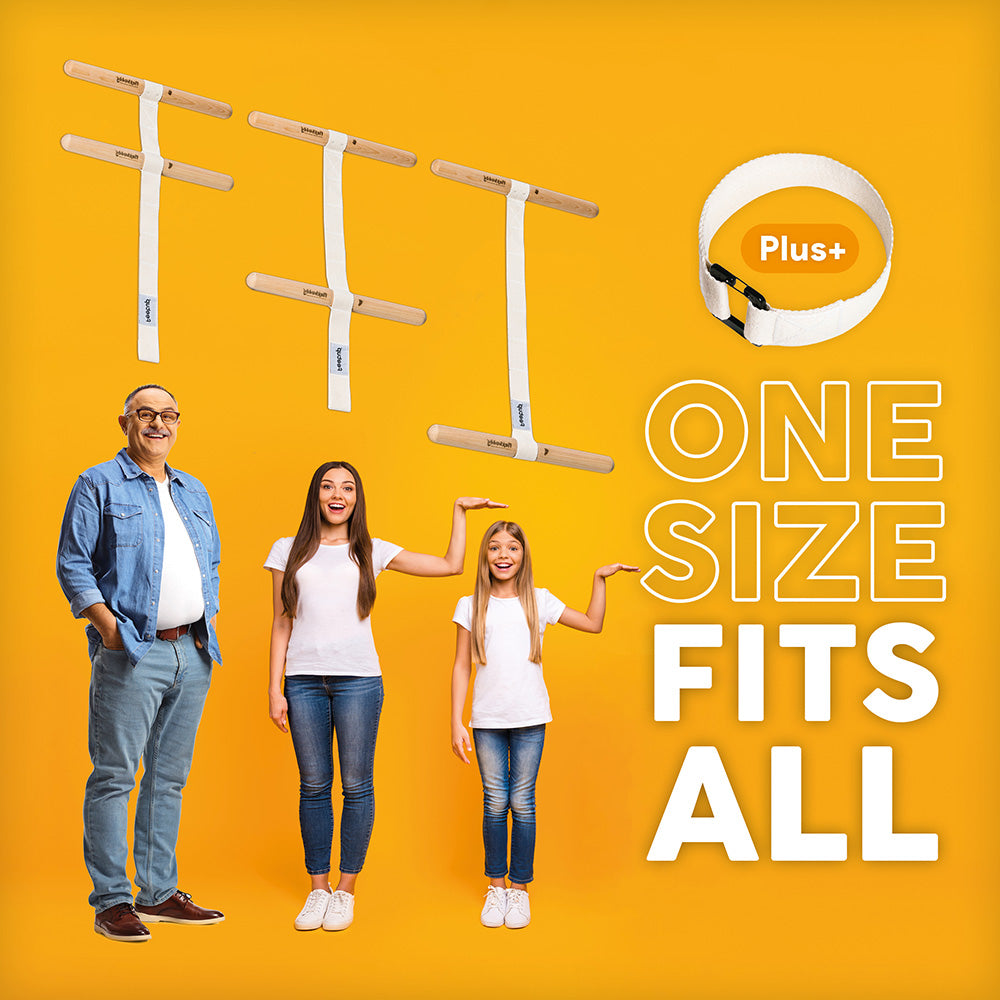
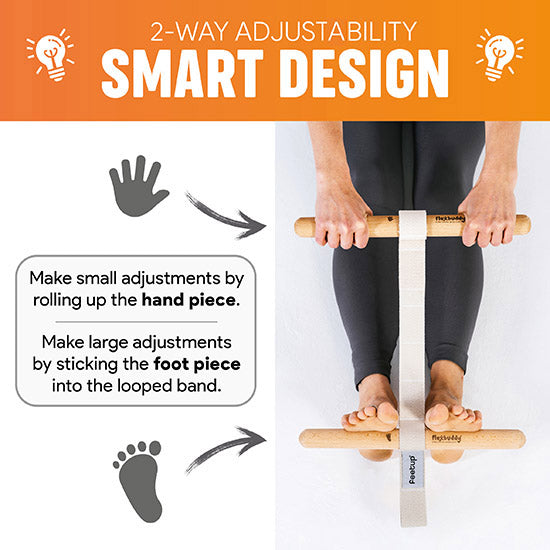
The right way: work at a strong but comfortable pull. Back off if your face tightens, your breath stops or the muscle shakes. Progress in small steps, and only when the current position has become easy. FlexBuddy is built for this: move the foot bar to another loop for a big step, roll the strap around the hand bar for a fine one.
Mistake 5: holding for too short a time, and too rarely
The dose that works is small. The mistake is the five-second token stretch, once a week. The American College of Sports Medicine recommends flexibility exercises for each major muscle-tendon group totalling 60 seconds per exercise, on at least two days a week [4]. That is usually split into holds: 15 seconds four times, or 20 seconds three times [16]. Holds of 10 to 30 seconds suit most adults; in older adults, 60-second holds were associated with greater hamstring gains [1]. Keep the habit and you keep the range, which may decrease again if you stop stretching [2].
The right way: pick the muscle group that limits you most and give it three holds of ten breaths, most days. With pauses, that is about two minutes, the same routine as in the FlexBuddy guide. Keep FlexBuddy where you will see it, and within a week you will not want to skip it. Timing by goal and age is in how long to hold a stretch.
Mistake 6: stretching cold muscles
Warm up first and the stretch feels better. Stretching is not a warm-up. Mayo Clinic is direct: you may hurt yourself if you stretch cold muscles, so warm up first with five to ten minutes of light walking, jogging or cycling, or stretch after your workout [2]. The ACSM recommendation, as summarised in the clinical literature, is the same: static stretching preceded by an active warm-up [1]. A gentle stretch after waking or at your desk is still fine.
The right way: move first. Five minutes of brisk walking or a few flights of stairs is enough. Save your deepest holds for when you are warm, and first thing in the morning start at half your usual depth.
Mistake 7: long static holds right before explosive sport
Get the timing right and you keep your power and your range. A meta-analysis of 104 studies found that static stretching just before exercise reduced maximal strength by 5.4% and explosive performance by 2.0% on average. The effects were smallest with stretches of 45 seconds or less [17].
A later systematic review shows the fix. Tested straight after stretching, static stretching cost 3.7% of performance on average, and the dose decided it: 60 seconds or more per muscle group cost 4.6%, less than 60 seconds cost 1.1%. When dynamic activity followed the stretch, as in a real warm-up, no clear effect remained [5].
The extra range from one bout of stretching typically lasts less than 30 minutes [5], so the daily habit is what builds range that stays. Range is what to judge stretching by; next-day soreness has its own Cochrane review of 12 studies in healthy adults [18].
The right way: before sprinting, jumping or heavy lifting, warm up with light aerobic work and dynamic movements, and keep any static stretch short. Do your long holds afterwards. The full comparison is in static vs dynamic stretching.
Mistake 8: only stretching, never strengthening
Add strength and your new range becomes range you can use. A meta-analysis of 11 randomised trials with 452 participants found that strength training gained as much range of motion as stretching [19]. A systematic review of six trials found consistent evidence that eccentric training, in which a muscle works while it lengthens, as in the slow lowering phase of an exercise, improves lower limb flexibility [20]. So do both: the stretch opens the range, and the strength work teaches your muscles to control it.
The right way: add strength work that takes the same muscles through a long range. The ACSM recommends resistance exercise for each major muscle group on two to three days a week [4]. For the hamstrings, use the hip hinge from mistake 1 with a light weight, lowered slowly.
Mistake 9: stretching through nerve pain
Tell a nerve from a muscle and your stretching stays safe. The hamstrings are supplied by the sciatic nerve [7], so an irritated nerve can feel like a "tight hamstring" that never loosens. A muscle stretch is a dull pull in the middle of the thigh that eases when you back off. Sciatica usually affects the bottom and the back of one leg, often as far as the foot and toes, with a sharp, burning pain, tingling like pins and needles, numbness or weakness [6].
Holding a hard stretch through those symptoms is pulling on an irritated nerve. What helps in nerve-related pain is a different technique, neural mobilisation: gentle gliding movements set up by a physiotherapist. A meta-analysis of 40 trials found that it improved pain and disability in chronic low back pain [21].
The right way: if a stretch produces burning, tingling, numbness or pain below the knee, stop, and do not test it again harder. See a physiotherapist or doctor, and read sciatica stretches first. Go to A&E if you have sciatica on both sides, severe or worsening weakness or numbness in both legs, numbness around the genitals or anus, or new difficulty controlling your bladder or bowels [6].
Mistake 10: chasing the wrong muscle
Find the short link and every minute of stretching counts. "I can't touch my toes, so my hamstrings are tight" is a guess. A forward bend is a chain: calves, hamstrings, hips, spine and the sciatic nerve all have to give. The largest calf muscle, the gastrocnemius, starts above the knee on the femur and inserts on the heel bone through the Achilles tendon, so it acts on both knee and ankle [22]. With straight knees and the toes pulled up, a short calf limits the bend, and you feel it behind the knee. Mayo Clinic's advice fits: stretch all the major muscle groups, both sides, and aim for equal flexibility left and right [2].
The right way: test before you stretch. Bend forward with straight knees, then with the knees slightly bent. If you reach much further the second time, hamstrings and calves are the limit, and FlexBuddy stretches the two together in one position. A pinch at the front of the hip, or a back that will not curl, points to the hips or spine, so put your stretching time there. The full self-test is in how to touch your toes.
The stretching mistakes checklist
Ten rows, one page. Run through it weekly until every sign in the middle column is gone.
| Mistake | Sign you are making it | The right way |
|---|---|---|
| 1. Rounding the lower back | The pull is in your back, not your thighs | Hinge at the hips, long spine, stop short of the toes; let FlexBuddy cover the reach |
| 2. Bouncing | You use momentum to get deeper | Ease in over three or four seconds, then hold still |
| 3. Holding your breath | Shoulders up, jaw tight, breath stopped | Count ten slow breaths; if you cannot, ease off |
| 4. Stretching too hard | Pain, shaking, a grimace | Tension only [2]; one small step at a time |
| 5. Too short, too rare | Five-second holds, once a week | About 60 seconds per muscle group, at least two days a week [4] |
| 6. Cold muscles | Your deepest stretch happens straight out of bed | Move for five to ten minutes first [2] |
| 7. Long holds before explosive sport | Holds of a minute or more just before sprints, jumps or lifts | Dynamic warm-up before; long holds afterwards |
| 8. Only stretching | Range you can reach with a strap but cannot control | Add slow, full-range strength work |
| 9. Stretching through nerve pain | Burning, tingling or numbness down the leg | Stop; see a physiotherapist or doctor |
| 10. Chasing the wrong muscle | Months of hamstring stretching and no change | Test first, then stretch the link that is short |

Get it right from day one with FlexBuddy
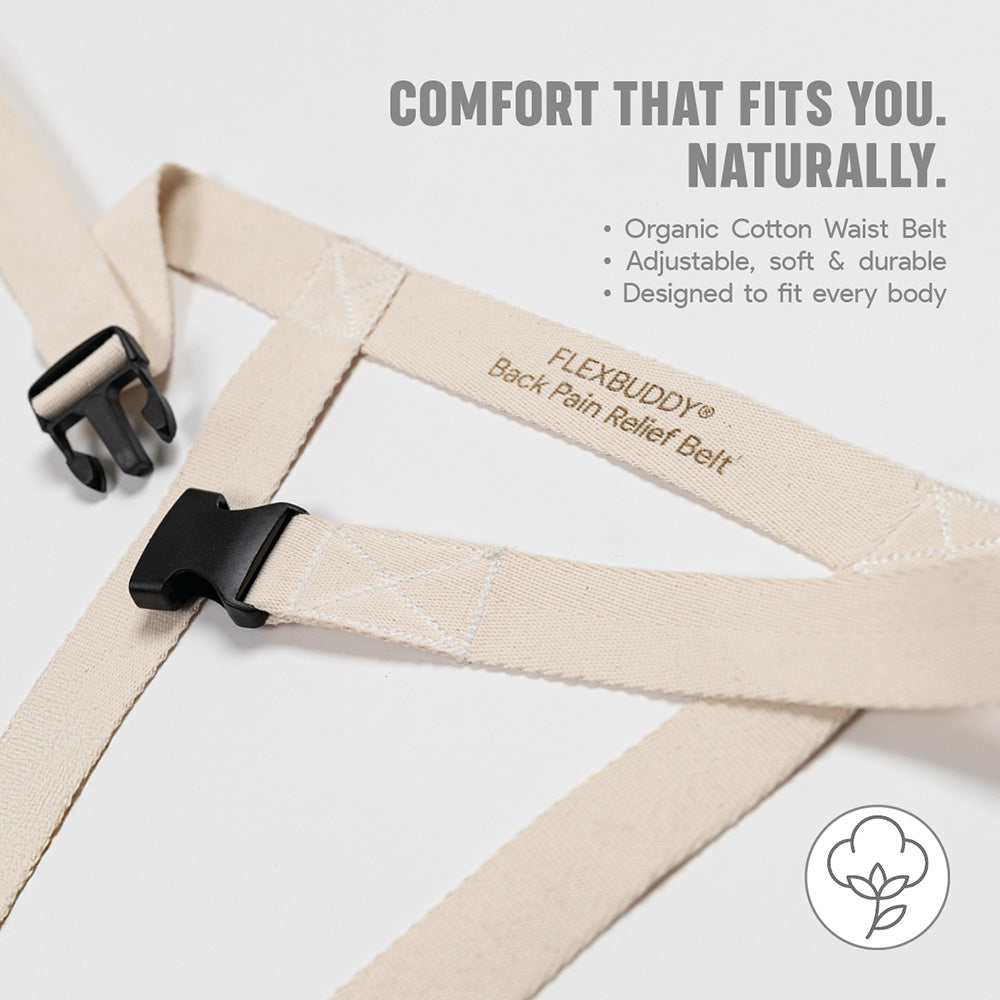
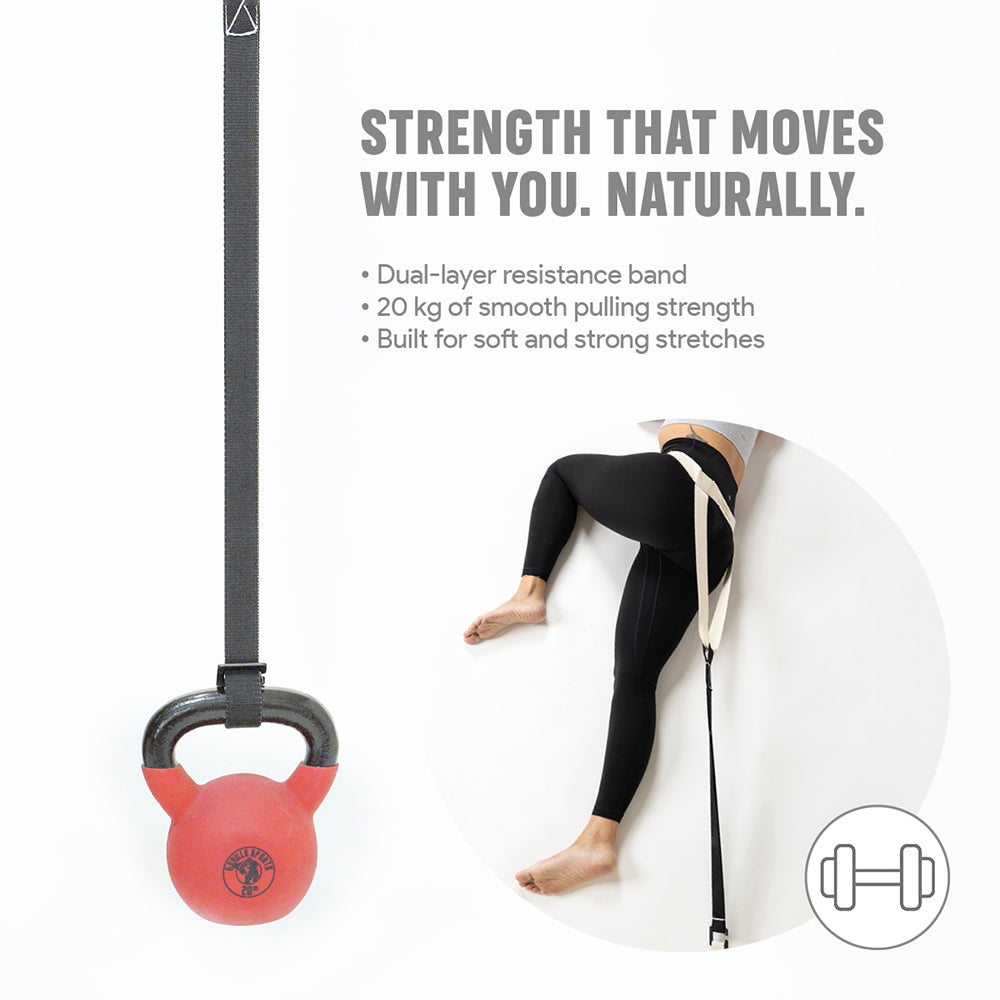
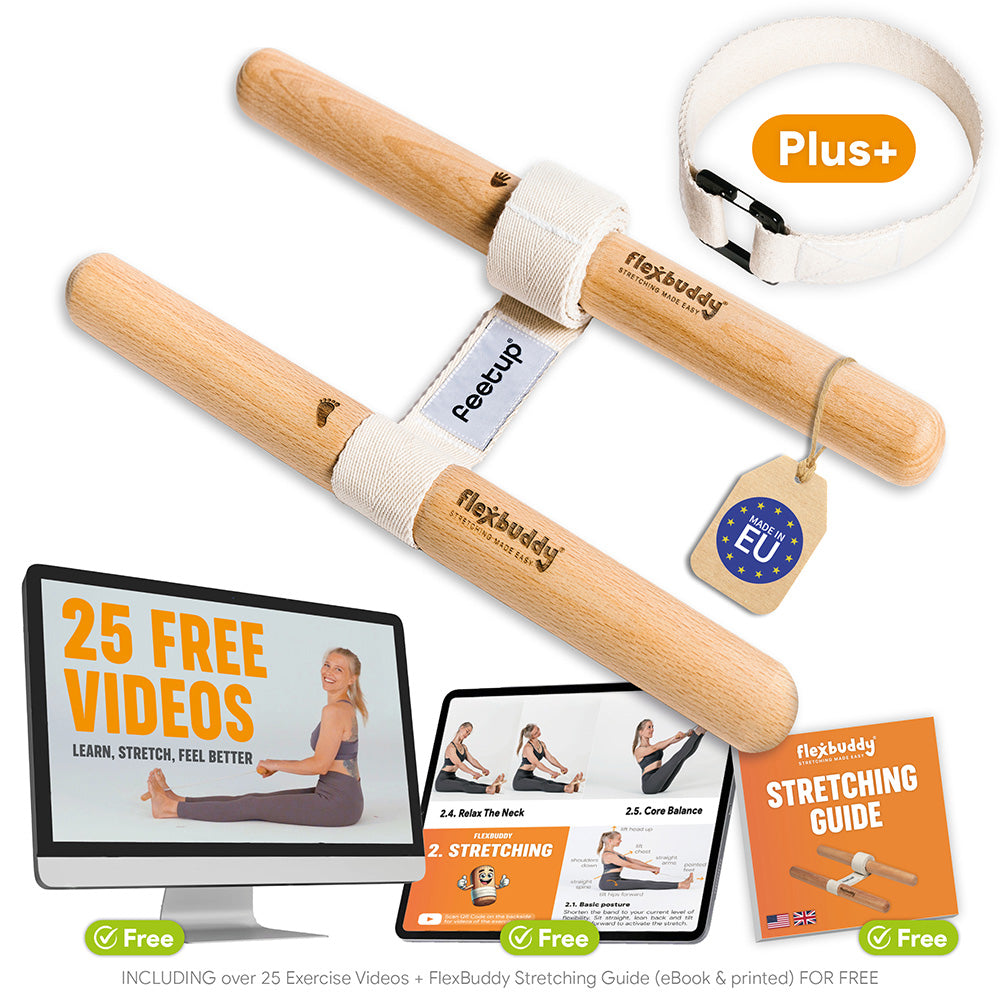
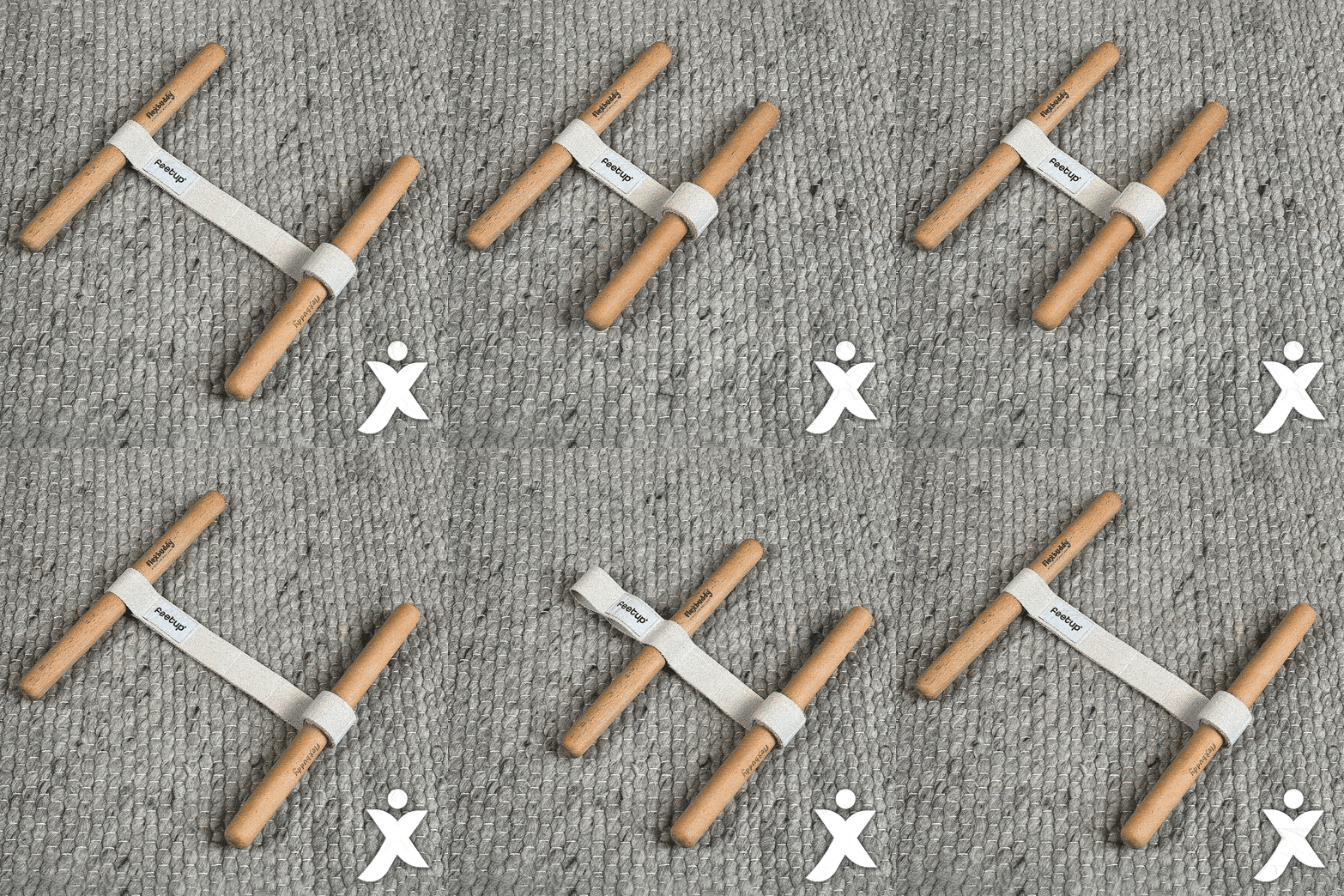
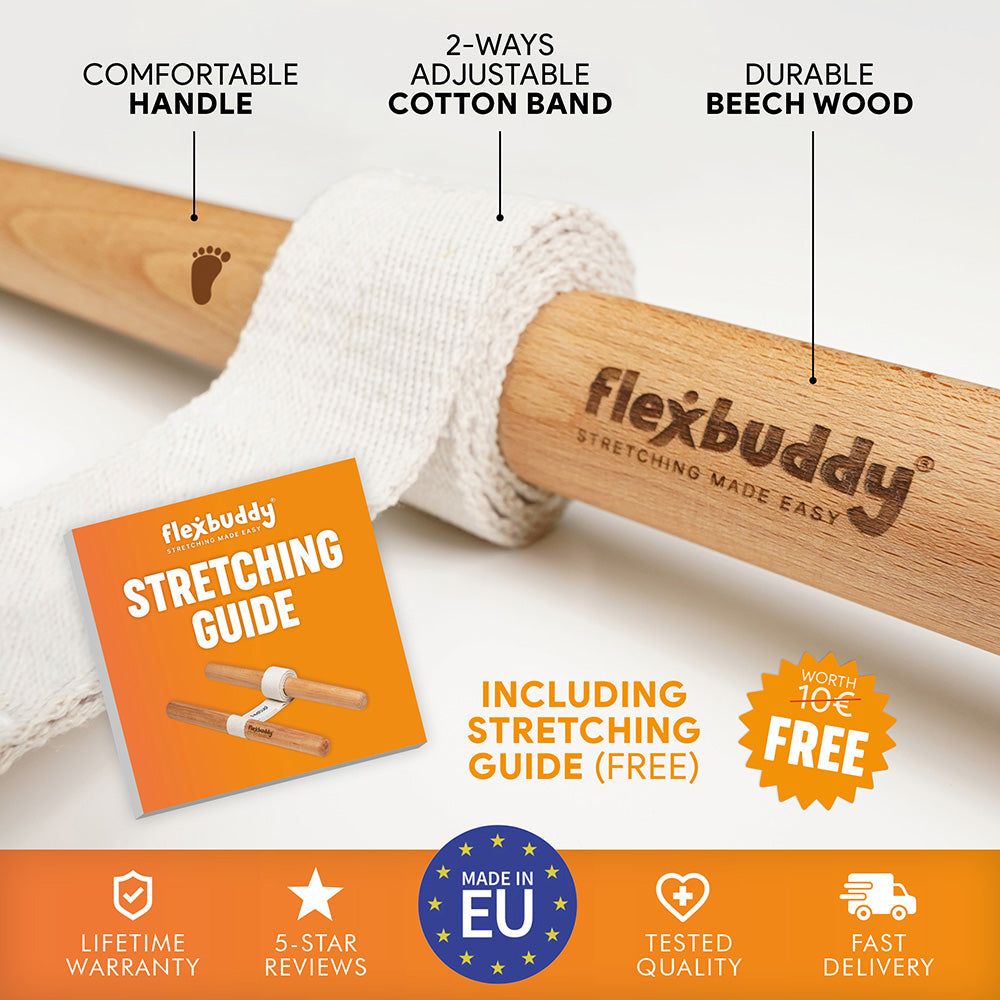
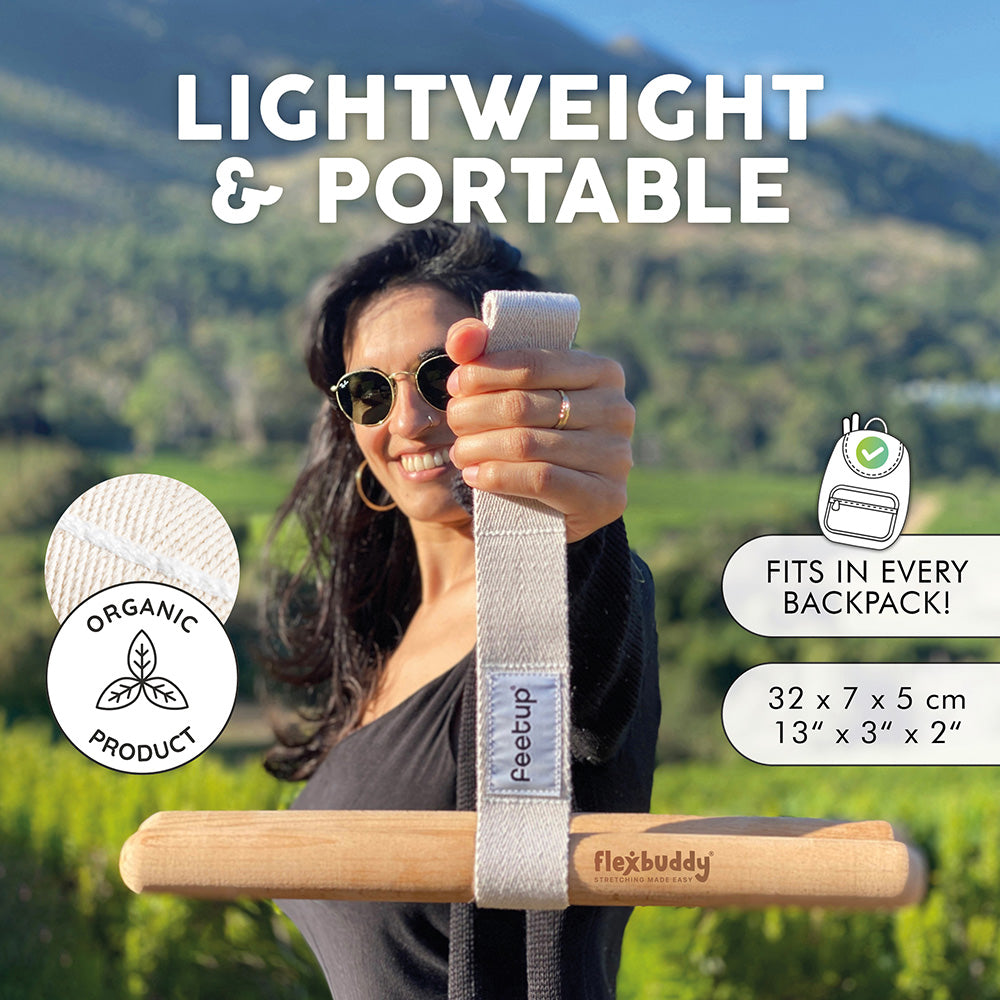
FlexBuddy® is a patented stretching device made of two beech-wood bars joined by an adjustable cotton strap: one bar goes under the soles of your feet, the other in both hands. It is designed around mistake 1. With straight arms on the handle you sit tall, lean back and tilt the hips forward, and the strap covers the distance to your feet, so your back has no reason to round. Scott K., a trainer, calls it "a great tool to help your clients maintain a neutral spine while stretching calves, hamstrings and lower back."
The wooden handles do not cut into the hands the way a thin band or rope can, so your shoulders stay down and you keep breathing. Length changes in big or fine steps, the answer to mistake 4. And the guide's routine answers mistake 5: ten deep breaths, a pause, three times, about two minutes a day. It is rated 4.5 by verified buyers, with a 30-day money-back guarantee and a lifetime warranty, so you can try it without risk. Get your FlexBuddy, or take the two-minute quiz to find your routine.
Frequently asked questions
Can stretching hurt your back?
Done properly, it does your back good: in a 2024 meta-analysis of 14 trials with 735 participants, hamstring stretching reduced pain in people with low back pain [23]. It only causes trouble when the stretch loads the back instead of the muscle you are aiming at: rounding to reach further, bouncing, or forcing through pain. More in does stretching help back pain?
Why does my back hurt when I stretch my hamstrings?
Usually because the movement comes from your spine and not your hips. When the hamstrings stop the pelvis tipping forward, the only way to get closer to your feet is to round the lower back, so that is where you feel it. Fold at the hip crease, chest lifted, and stop when the thighs pull. FlexBuddy makes that easy: the strap covers the distance to your feet. If the pain is sharp or runs down a leg, stop and have it checked.
Is it bad to stretch with a rounded back?
It wastes the stretch: a rounded back moves it out of the hamstrings. The spine is built to bend, and gentle rounding, as in a Cat-Cow, is fine [12]. What laboratory studies of spine segments warn about is bending that is highly repetitive and loaded [10], so do not bounce, force or add weight in a rounded position, and take more care with a known disc problem.
Should stretching hurt?
No. Expect tension, not pain; if it hurts, ease back until it does not [2]. Early gains come mostly from a higher tolerance to the stretch, not a longer muscle [3], and tolerance is built by calm repetition, not force.
How do I know if I'm stretching properly?
Four checks. You feel the pull in the muscle you are aiming at, not in a joint or your back. You can breathe slowly throughout. Nothing burns, tingles or goes numb. And you do it often enough to count: about 60 seconds per muscle group, on at least two days a week [4].
How do you stretch properly before a workout?
Warm up with five to ten minutes of light movement [2], then use dynamic stretches such as leg swings. Keep any static stretch under 60 seconds per muscle group, where the average performance cost is about 1% [5], and save long holds for afterwards.
This article is general information, not medical advice. Tight muscles usually respond well to regular stretching. If your pain is sharp, radiates down a leg, comes with numbness, weakness, fever, bladder or bowel changes, follows an injury, or keeps getting worse, see a doctor or physiotherapist before you stretch.
References
- Page P. Current concepts in muscle stretching for exercise and rehabilitation. Int J Sports Phys Ther. 2012;7(1):109–119. PMID 22319684. https://pmc.ncbi.nlm.nih.gov/articles/PMC3273886/ (accessed 4 Nov 2026).
- Mayo Clinic Staff. Stretching: Focus on flexibility. Mayo Clinic, 18 Nov 2023. https://www.mayoclinic.org/healthy-lifestyle/fitness/in-depth/stretching/art-20047931 (accessed 4 Nov 2026).
- Weppler CH, Magnusson SP. Increasing muscle extensibility: a matter of increasing length or modifying sensation? Phys Ther. 2010;90(3):438–449. doi:10.2522/ptj.20090012
- Garber CE, Blissmer B, Deschenes MR, et al.; American College of Sports Medicine. Position stand: quantity and quality of exercise for developing and maintaining cardiorespiratory, musculoskeletal, and neuromotor fitness in apparently healthy adults. Med Sci Sports Exerc. 2011;43(7):1334–1359. doi:10.1249/MSS.0b013e318213fefb
- Behm DG, Blazevich AJ, Kay AD, McHugh M. Acute effects of muscle stretching on physical performance, range of motion, and injury incidence in healthy active individuals: a systematic review. Appl Physiol Nutr Metab. 2016;41(1):1–11. doi:10.1139/apnm-2015-0235
- NHS. Sciatica. nhs.uk, page last reviewed 3 Dec 2024. https://www.nhs.uk/conditions/sciatica/ (accessed 10 Nov 2026).
- Jones O. Muscles of the Posterior Thigh: Hamstrings. TeachMeAnatomy, last updated 9 Apr 2026. https://teachmeanatomy.info/lower-limb/muscles/thigh/hamstrings/ (accessed 10 Nov 2026).
- Mayorga-Vega D, Merino-Marban R, Viciana J. Criterion-related validity of sit-and-reach tests for estimating hamstring and lumbar extensibility: a meta-analysis. J Sports Sci Med. 2014;13(1):1–14. PMID 24570599. https://pubmed.ncbi.nlm.nih.gov/24570599/ (accessed 4 Nov 2026).
- Adams MA, Hutton WC. Gradual disc prolapse. Spine. 1985;10(6):524–531. doi:10.1097/00007632-198507000-00006
- Callaghan JP, McGill SM. Intervertebral disc herniation: studies on a porcine model exposed to highly repetitive flexion/extension motion with compressive force. Clin Biomech (Bristol). 2001;16(1):28–37. doi:10.1016/S0268-0033(00)00063-2
- Adams MA, McNally DS, Dolan P. 'Stress' distributions inside intervertebral discs: the effects of age and degeneration. J Bone Joint Surg Br. 1996;78(6):965–972. PMID 8951017. https://pubmed.ncbi.nlm.nih.gov/8951017/ (accessed 4 Nov 2026).
- Adams MA, Hutton WC. The effect of posture on the lumbar spine. J Bone Joint Surg Br. 1985;67(4):625–629. doi:10.1302/0301-620X.67B4.4030863
- Hackett DA, Chow CM. The Valsalva maneuver: its effect on intra-abdominal pressure and safety issues during resistance exercise. J Strength Cond Res. 2013;27(8):2338–2345. doi:10.1519/JSC.0b013e31827de07d
- Apostolopoulos N, Metsios GS, Flouris AD, Koutedakis Y, Wyon MA. The relevance of stretch intensity and position: a systematic review. Front Psychol. 2015;6:1128. doi:10.3389/fpsyg.2015.01128
- Freitas SR, Vilarinho D, Rocha Vaz J, Bruno PM, Costa PB, Mil-Homens P. Responses to static stretching are dependent on stretch intensity and duration. Clin Physiol Funct Imaging. 2015;35(6):478–484. doi:10.1111/cpf.12186
- Harvard Health Publishing. The ideal stretching routine. Harvard Medical School, 16 Mar 2026 (reviewed by H. E. LeWine, MD). https://www.health.harvard.edu/staying-healthy/the-ideal-stretching-routine (accessed 4 Nov 2026).
- Simic L, Sarabon N, Markovic G. Does pre-exercise static stretching inhibit maximal muscular performance? A meta-analytical review. Scand J Med Sci Sports. 2013;23(2):131–148. doi:10.1111/j.1600-0838.2012.01444.x
- Herbert RD, de Noronha M, Kamper SJ. Stretching to prevent or reduce muscle soreness after exercise. Cochrane Database Syst Rev. 2011;(7):CD004577. doi:10.1002/14651858.CD004577.pub3
- Afonso J, Ramirez-Campillo R, Moscão J, et al. Strength training versus stretching for improving range of motion: a systematic review and meta-analysis. Healthcare (Basel). 2021;9(4):427. doi:10.3390/healthcare9040427
- O'Sullivan K, McAuliffe S, Deburca N. The effects of eccentric training on lower limb flexibility: a systematic review. Br J Sports Med. 2012;46(12):838–845. doi:10.1136/bjsports-2011-090835
- Basson A, Olivier B, Ellis R, Coppieters M, Stewart A, Mudzi W. The effectiveness of neural mobilization for neuromusculoskeletal conditions: a systematic review and meta-analysis. J Orthop Sports Phys Ther. 2017;47(9):593–615. doi:10.2519/jospt.2017.7117
- Jones O. Muscles in the Posterior Compartment of the Leg. TeachMeAnatomy, last updated 6 Nov 2025. https://teachmeanatomy.info/lower-limb/muscles/leg/posterior-compartment/ (accessed 10 Nov 2026).
- Gou Y, Lei H, Chen X, Wang X. The effects of hamstring stretching exercises on pain intensity and function in low back pain patients: a systematic review with meta-analysis of randomized controlled trials. SAGE Open Med. 2024;12:20503121241252251. doi:10.1177/20503121241252251