- A stiff upper back loosens quickly. The thoracic spine, twelve vertebrae each joined to a pair of ribs [1], is built to turn: healthy volunteers rotated about 25 degrees to each side through it [2], and it arches further on hands and knees than standing [3].
- Movement keeps it free. Active young adults who sat less had about 10 degrees more upper-back rotation than peers who sat over seven hours a day and exercised little [4].
- Your shoulders and neck feel it first. Arms lift higher when you are upright than when you slouch [5], and people with neck pain have less upper-back mobility than people without [6].
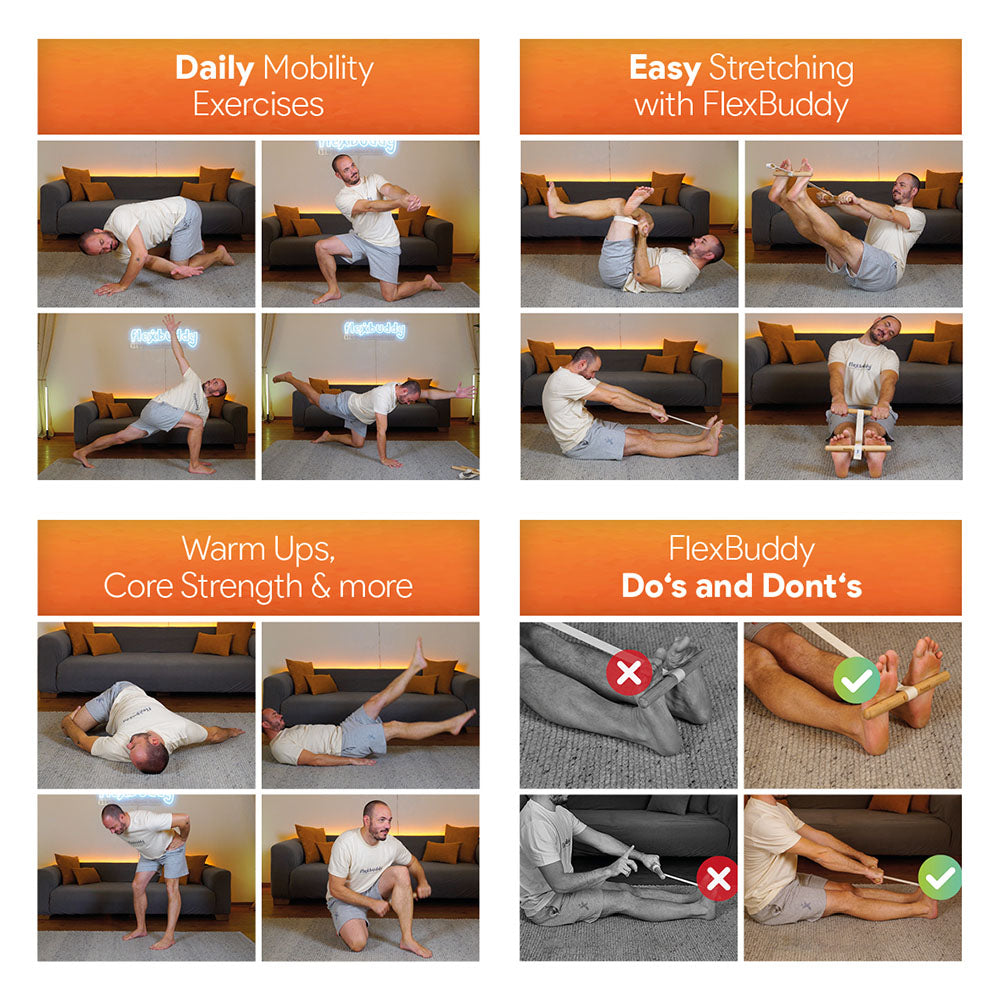
- Six drills cover it: Cat-Cow, thread the needle, open book, towel or foam-roller extension, seated rotation and the wall angel, on at least two days a week [7].
- Know the red flags. Upper-back pain with chest pain, breathlessness, night pain, a recent accident or a risk of osteoporosis is not a mobility problem and needs a clinician [8].
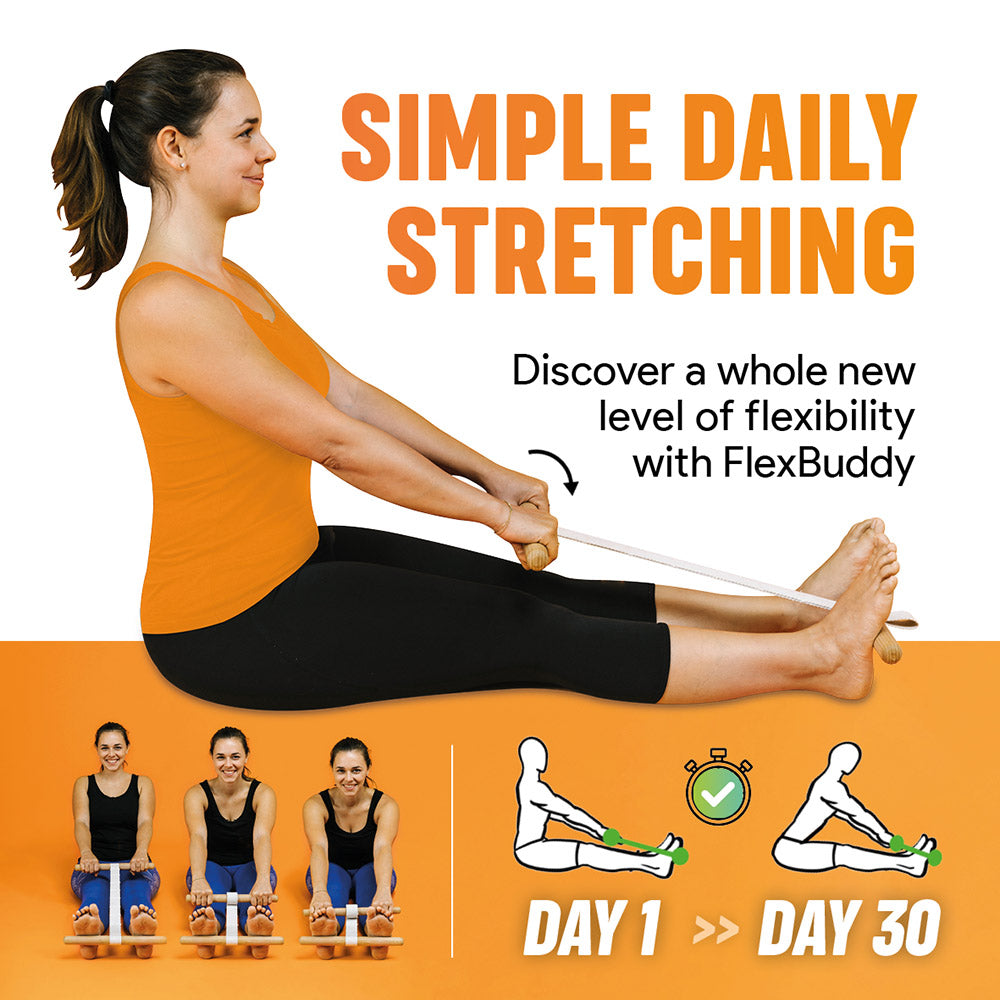
- FlexBuddy® trains the upright half. Its basic posture is chest lifted, shoulders down and spine tall for ten deep breaths: the opposite of the desk slump.
What the thoracic spine is, and how much it can move
The thoracic spine is the middle region of your spine: twelve vertebrae, T1 to T12, between the neck and the lower back [1]. What sets it apart is the ribs. Each rib joins the spine in two places, at joints that allow only slight gliding [1]. Together with the breastbone, the ribs and the thoracic spine form a cage around the heart and lungs [1].
Each joint moves a little, and twelve of them add up. When researchers scanned healthy volunteers at full trunk rotation, the thoracic spine turned about 25 degrees to each side. Each segment contributed between half a degree and just under three degrees, and the middle and lower segments, T6 to T11, turned the most [2]. Bending backwards (extension) is the smaller movement: pain-free young adults extended the thoracic spine by a mean of 8.7 degrees from normal standing and flexed forwards by 11.5 [3].
Rotation is the upper back's main job: one research group describes the thoracic spine as providing about 80% of the trunk's turning movement [4].
Why does the upper back get stiff?
It stops being asked to move. That is good news: movement is something you can give back today.
Sitting time and too little movement
A UK university study measured upper-back rotation in healthy adults aged 18 to 30. Those who sat for more than seven hours a day and exercised for less than 150 minutes a week averaged about 65 degrees of thoracic rotation. Those who exercised for more than 150 minutes and sat for under four hours a day averaged about 75 [4]. Ten degrees more turn in the people who moved. Rotation tracked the amount of exercise even more closely than the hours of sitting [4]: the upper back stays mobile in people who move it.
Age
The upper-back curve, called kyphosis, deepens with age. A systematic review of 34 studies and 7,633 healthy adults found significantly smaller curves under 40 than over 60 [9]. Thoracic mobility falls with age as well [6]. Neither is a one-way street, as the adults over 60 further down show.
Habit and position
The young adults in the extension study arched further through the upper back on hands and knees or lying face down than standing or sitting [3]. The range is there, and the drills below ask for it.
Why upper-back mobility matters for your shoulders and neck
Shoulders
Raising both arms overhead is partly an upper-back movement. When pain-free men were X-rayed standing and again with both arms fully raised, the thoracic spine straightened by a mean of 12.8 degrees [10]. And a systematic review of ten studies found strong evidence that maximum shoulder range is greater in upright postures than slouched ones [5]. Sit tall and your arms go higher, straight away. More in our guide to rounded shoulders.
Neck
Your neck borrows movement from the thoracic spine, which is reported to contribute about a third of the movement when you bend your neck forwards and about a fifth when you turn your head [4]. A 2019 review of nine studies found reduced thoracic mobility in people with neck pain, and a deeper upper-back curve went with forward head posture [6].
That makes the upper back a rewarding place to work. A meta-analysis of 14 randomised trials found that thoracic manipulation by a therapist reduced mechanical neck pain more than mobilisation or standard care in the short term [11]. In a trial of people with forward head posture, four weeks of upper-thoracic mobilisation plus a face-down chest-lift exercise improved head position and neck pain more than work aimed at the upper neck [12]. A chest lift of that kind is part of drill 6 below. More in our posture guide.
Three self-tests to find your starting point
Do them today, then again in a month.
- Seated rotation. Sit on a firm chair with a cushion squeezed between your knees so the pelvis cannot follow. Cross your arms over your chest, grow tall and turn as far as you can without leaning. Compare sides. Clinic versions of this test are reliable: in healthy adults, five thoracic rotation tests showed good agreement between sessions and examiners, and the smallest detectable change was roughly two to six degrees [13]. By eye you will catch the bigger differences.
- Wall angel. Stand with your heels a hand's width from a wall and your bottom, upper back and head touching it. Raise your arms to a goalpost shape, rest the elbows and backs of the hands on the wall, then slide them overhead. If the hands leave the wall or the lower back arches hard, the upper back or the chest muscles are short.
- Lying extension over a towel. Roll a bath towel to the thickness of your forearm and lie back over it so it sits across the spine just below the shoulder blades, knees bent, hands supporting your head, for five slow breaths. Pinching, or a head that cannot come near the floor without the lower ribs lifting, suggests limited extension.
Take the results as a starting point. People are built differently: on X-ray, thoracic extension in healthy men ranged from 0 to 26 degrees [14]. Compare yourself with yourself: film the tests, use them to choose your drills, and repeat them after four weeks.
6 thoracic mobility exercises, with doses
These are slow movements with short pauses. For held stretches the American College of Sports Medicine recommends a total of 60 seconds per exercise on at least two days a week [7], and the pauses below add up to roughly that. Move to mild tension, never into pain.
| Drill | Position | Dose | What it frees |
|---|---|---|---|
| 1. Cat-Cow | Hands and knees, or seated with FlexBuddy | 10 slow rounds | Bending and arching, unloaded |
| 2. Thread the needle | Hands and knees | 8 per side, 2 breaths at the end | Rotation |
| 3. Open book | On your side, knees bent | 8 per side, 2 breaths open | Rotation, lower back held still |
| 4. Towel or foam-roller extension | On your back, roll across the upper back | 5 breaths at each of 3 levels | Extension |
| 5. Seated rotation, long spine | Chair, arms crossed | 5 per side, 3 breaths each | Rotation at the desk |
| 6. Wall angel or prone extension | Against a wall, or face down | 10 slow reps | Extension plus strength |
1. Cat-Cow
On hands and knees, breathe out and round the whole spine towards the ceiling. Breathe in and reverse it: chest forwards between the arms, breastbone lifting, without dropping all of the arch into the lower back. This is one of the positions that gave young adults the most upper-back extension [3].
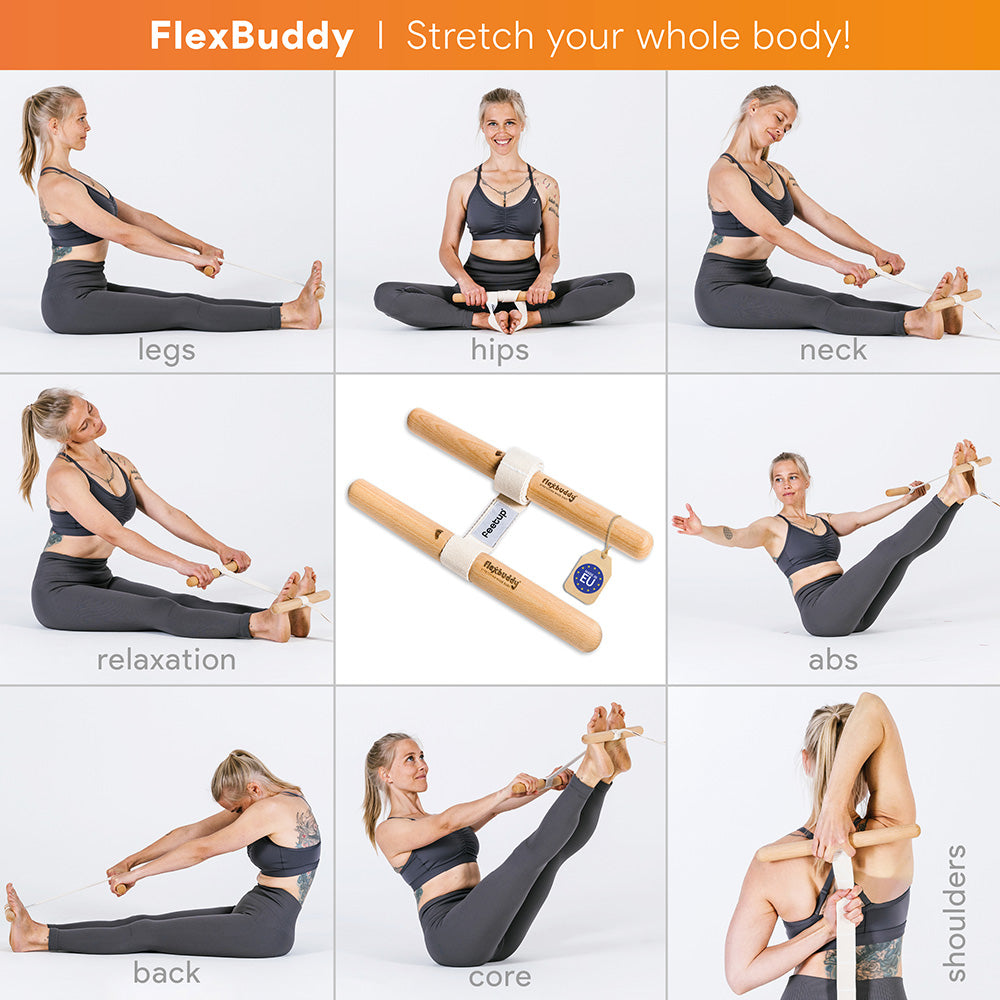
With FlexBuddy you can do it seated: take the basic posture, foot bar under your soles and hand bar in both hands, and do the same ten rounds. The strap gives your chest something to lift against.
2. Thread the needle
From hands and knees, slide your right arm, palm up, along the floor under your left arm until the right shoulder rests on the mat. Pause for two breaths, then unwind and reach the same arm to the ceiling. Keep the hips over the knees so the turn comes from the ribs, not the pelvis.
3. Open book (side-lying rotation)
Lie on your side, hips and knees bent to right angles, arms straight out in front with palms together. Keeping the knees together on the floor, lift the top arm up and over as if opening a book, and let your head and chest follow. Take two slow breaths, then close. The bent knees hold the pelvis still.
4. Towel or foam-roller extension
Lie back over a rolled towel or foam roller placed across the upper back, knees bent, hands cradling the head. Breathe out and let the upper back drape over the roll without the lower ribs flaring. After five breaths, move the roll a few centimetres higher; cover three levels between the bottom and top of the shoulder blades. Keep the roll on the part of the spine that has ribs, never under the lower back or neck.
The roller earns its place. A meta-analysis of 26 trials found that foam rolling has a large immediate effect on range of motion [15]. In an eight-week study, women with an average age of 63.5 who did 20 minutes of daily exercises on a long roller gained about six and a half degrees of overhead shoulder range [16]. The methods are compared in foam rolling versus stretching.
5. Seated rotation with a long spine
Sit towards the front of a chair, feet flat, arms crossed over your chest, and lengthen up through the crown of the head. Turn from the breastbone, not the shoulders, and stay for three breaths, growing taller on each breath in and turning a little further on each breath out.
6. Wall angel or prone extension
Set up as in the self-test and slide the arms slowly from the goalpost position to overhead and back, about three seconds each way. Or lie face down with your hands by your ears, tuck the chin, lift the chest a few centimetres, hold for three seconds and lower. This is the strength half, and it matters: a meta-analysis of ten randomised trials found that exercise has a large effect on the upper-back curve, and points to strengthening as the key ingredient [17].
FlexBuddy's Shoulder Opener pairs well with it: hold both handles in front with straight arms, raise the device overhead and slightly behind, lower with control, 5 to 8 slow reps.
Breathing and the rib cage
Because every rib is jointed to the thoracic spine [1], the upper back and the breath share hardware. Sit upright and you breathe better: in healthy volunteers, slumped sitting significantly reduced lung capacity and expiratory flow compared with normal sitting, and standing gave the best figures of all [18]. Use that in every drill: breathe in as you open or arch, breathe out as you turn a little further or drape over the towel. You finish taller, looser and calmer.
Who benefits most from thoracic mobility work?
Desk workers
If you sit for a living, this is for you: in the university study the long sitters turned the least [4]. The wider routine is in desk stretches for sitting all day, and if your neck is the part that complains, add our neck stretches.
Golfers and racket players
A swing or a serve is a fast trunk rotation, and the segments that rotate most are the middle and lower thoracic ones [2]. Open book and thread the needle work that same turn, which makes them an ideal warm-up.
Rowers
Rib stress fractures occur in 8.1% to 16.4% of elite rowers, mostly in ribs four to eight, and a review lists stiff joints among the possible factors [19]. Never try to stretch or roll away a sharp, localised rib pain.
Lifters going overhead
A press or a snatch needs the arms fully raised, a position that borrowed about 13 degrees of upper-back extension in the X-ray study above [10]. Cat-Cow, towel extensions and wall angels are the warm-up that gets your upper back ready to give it.
A daily plan: 3 minutes at the desk, 8 minutes at home
At the desk (3 minutes)
- Seated rotation with a long spine: 5 per side, three breaths each.
- Chair-back extension, the desk version of drill 4: hands behind the head, lean the upper back over the top of the backrest for 5 slow breaths, twice.
- Shoulder-blade squeezes: back and down, hold 3 seconds, 10 times.
Stand up first: breaking up sitting with frequent short bouts of standing and movement is recommended even for people who exercise [7].
At home (8 minutes)
- Cat-Cow, 10 rounds (1 minute).
- Thread the needle, 8 per side (2 minutes).
- Open book, 8 per side (2 minutes).
- Towel or roller extension, 5 breaths at each of 3 levels (1.5 minutes).
- Wall angel or prone extension, 10 slow reps (1.5 minutes).
Have a FlexBuddy? Finish in its basic posture: sit straight, chest lifted, shoulders down, ten deep breaths.
Aim for three sessions a week; two is the guideline minimum for flexibility work [7]. Movement feels freer straight after a session [15]. The studies behind this article got their results in four weeks [12], in eight weeks [16] and, for the upper-back curve itself, in six months of spine strengthening three times a week, which reduced the curve in adults over 60 by three degrees more than a control group [20]. So: lighter today, a better self-test in a month, a straighter back if you keep going.
To keep it going, tie the session to something you already do every evening and leave your FlexBuddy where you will see it. Give it two weeks and your body will start asking for it.
When upper-back pain is not a mobility problem
Upper-back pain is common: in population studies of children, adolescents and adults, between 15% and 27.5% reported thoracic spine pain in a given year [21], and back pain usually improves within a few weeks [8]. But the thoracic spine sits behind the heart and lungs, and the NHS lists pain coming from the top of the back, between the shoulders, as a reason in itself to see a GP [8]. Stop the drills and get medical advice if any of these apply:
- Chest pain or breathlessness. Call 999 for back pain with chest pain [8], or for chest pain that spreads to an arm, the neck, jaw or back, or comes with sweating, sickness, light-headedness or shortness of breath [22].
- Night pain, pain that rest does not ease, unexplained weight loss, or a lump or change of shape in the back: see a GP [8].
- Trauma. Back pain that started after a serious accident is an emergency [8].
- Fever or feeling generally unwell, or severe pain that starts suddenly or worsens quickly: urgent GP appointment or 111 [8].
- Numbness, tingling or weakness in both legs, or bladder or bowel changes: 999 or A&E [8].
- Osteoporosis or fracture risk. Back pain, a spine that is becoming curved and loss of height can be caused by small breaks in the bones of the spine [23]. See a GP before starting any of this.
A review of age-related hyperkyphosis describes an older study of women with a previous spinal fracture in which 68% of those given forward-bending exercises had another fracture, against 16% of those given extension exercises [24]. Until a clinician has set your programme, skip the rounding half of Cat-Cow, forced twisting and hard rollers.
Sit tall every day with FlexBuddy
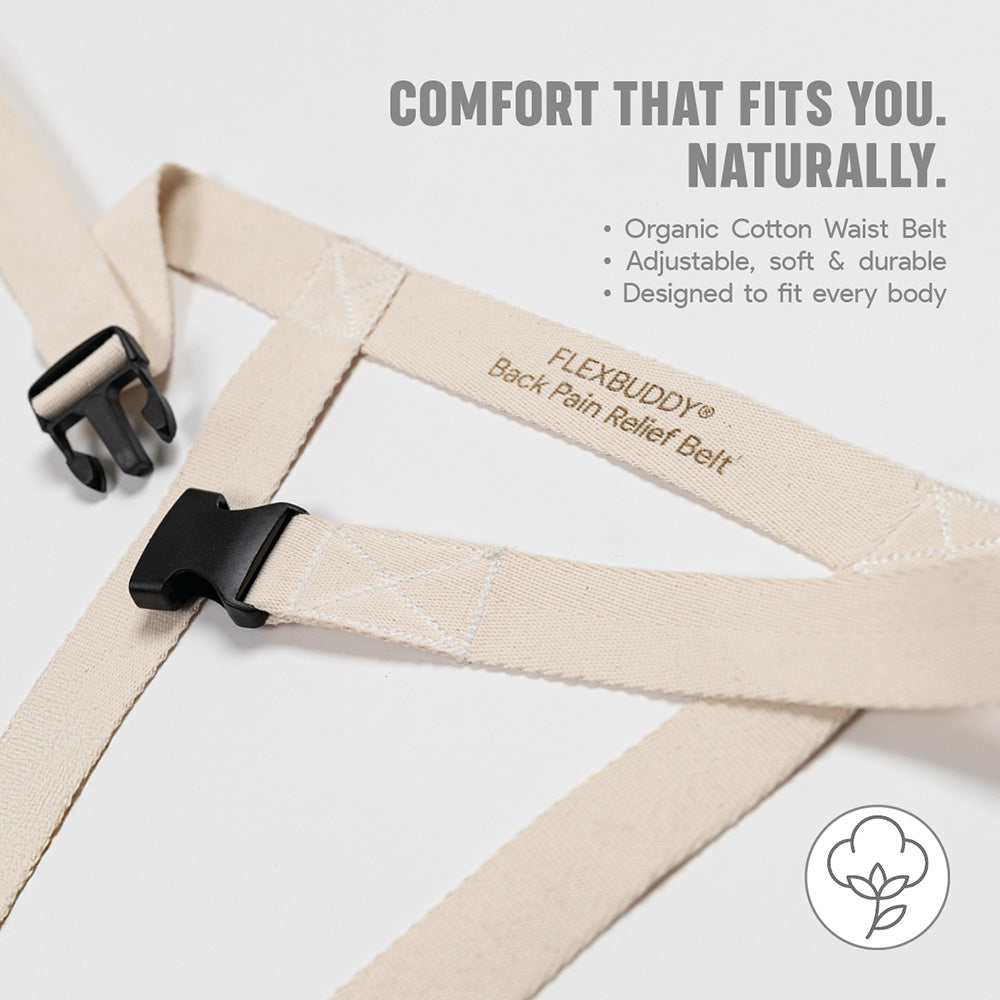
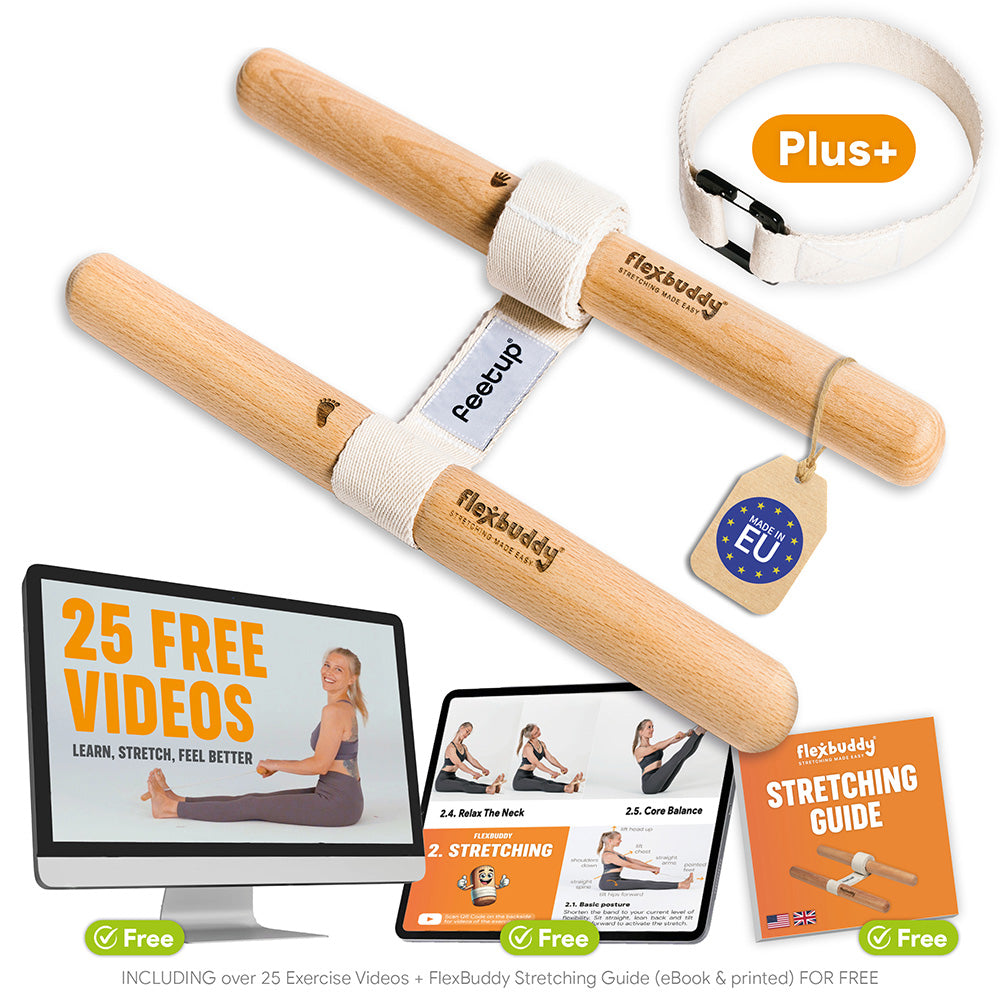
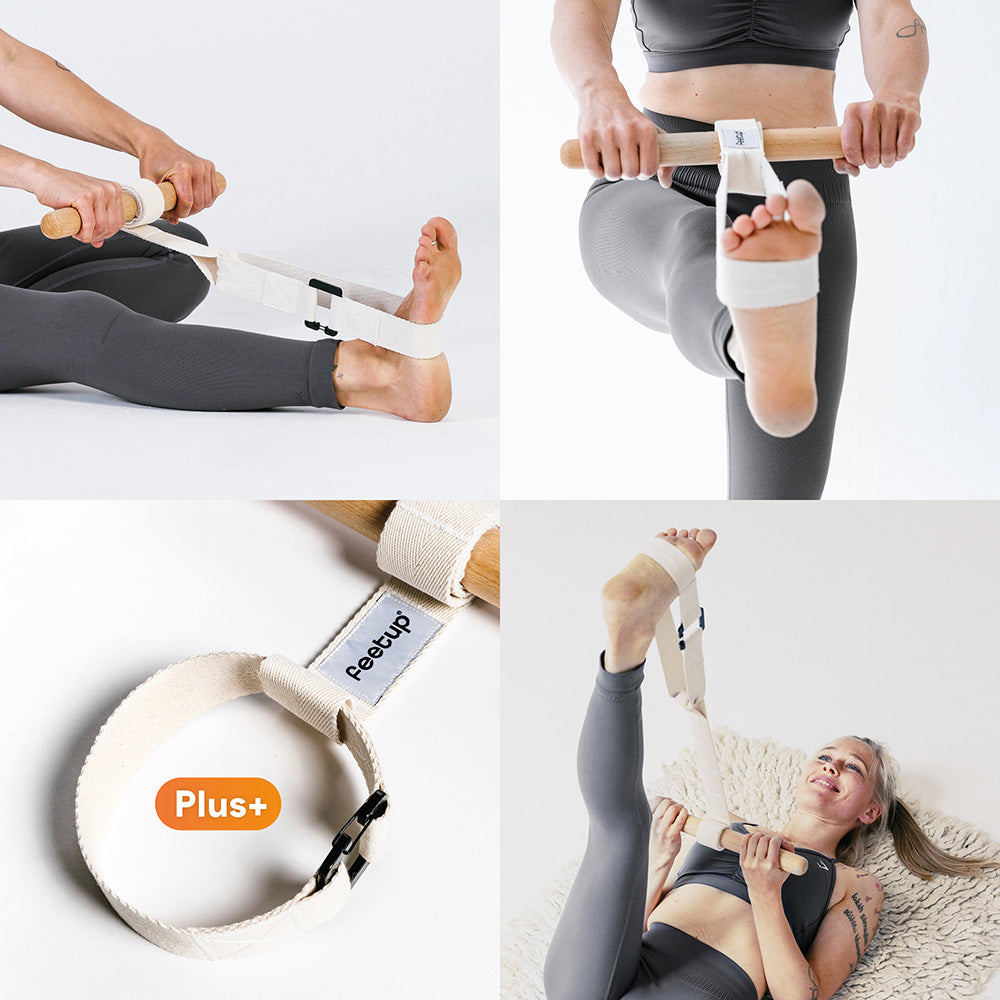
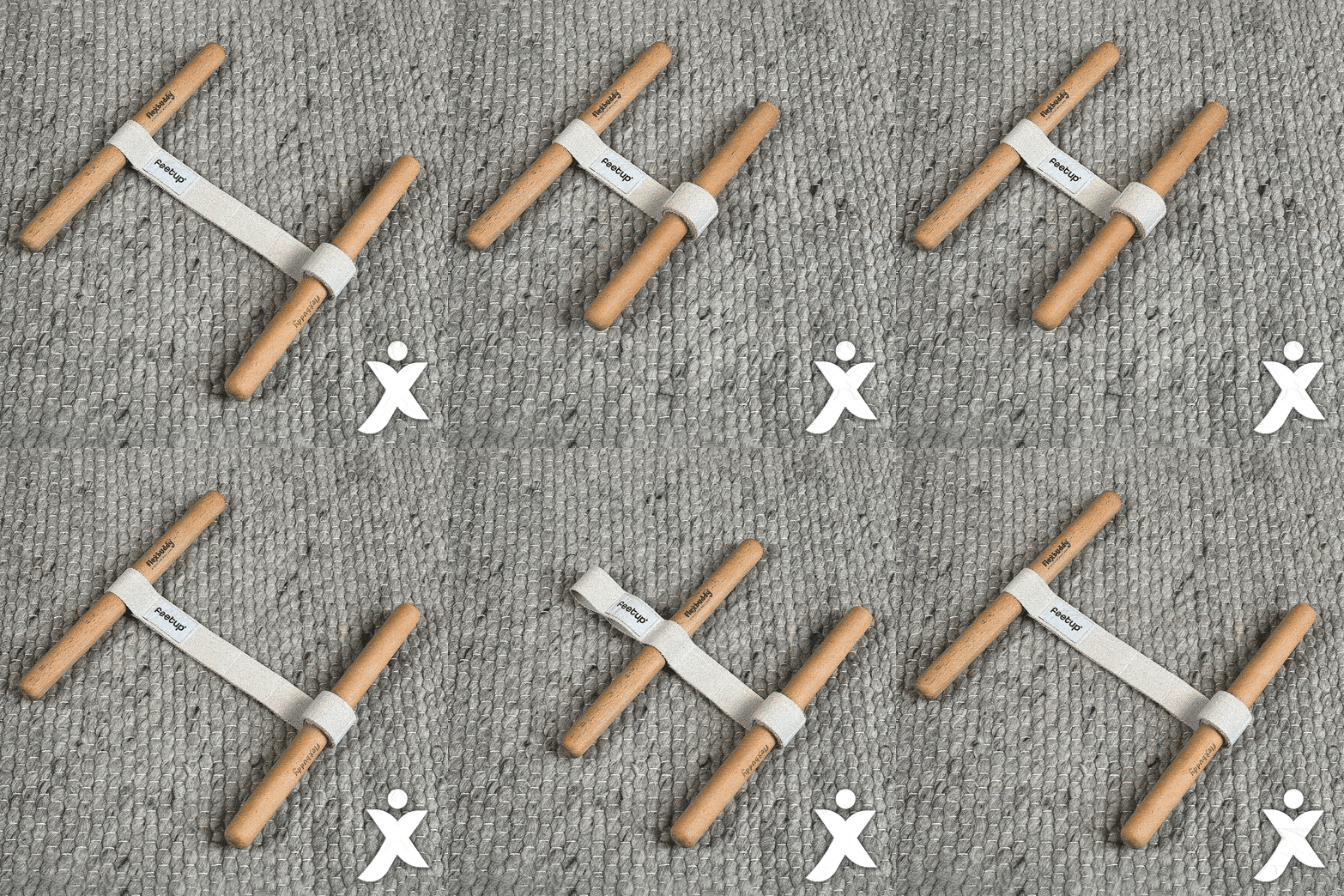
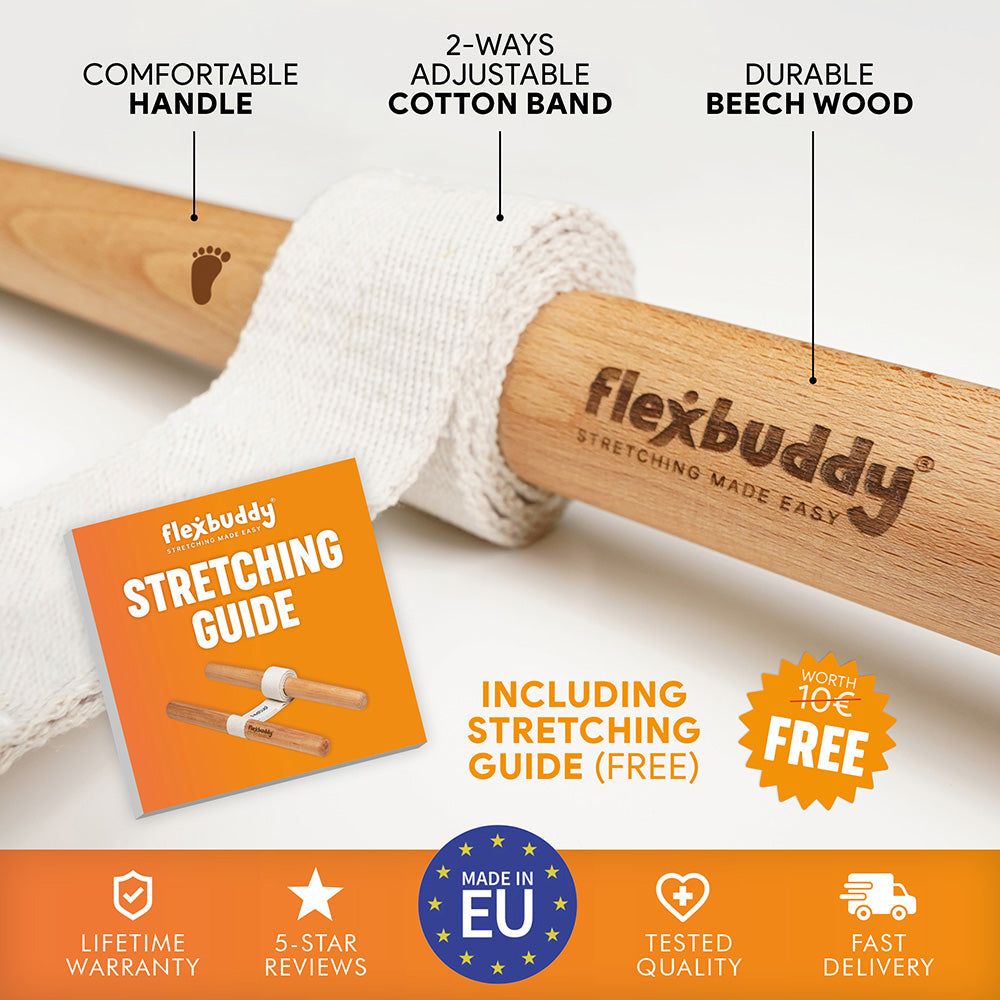
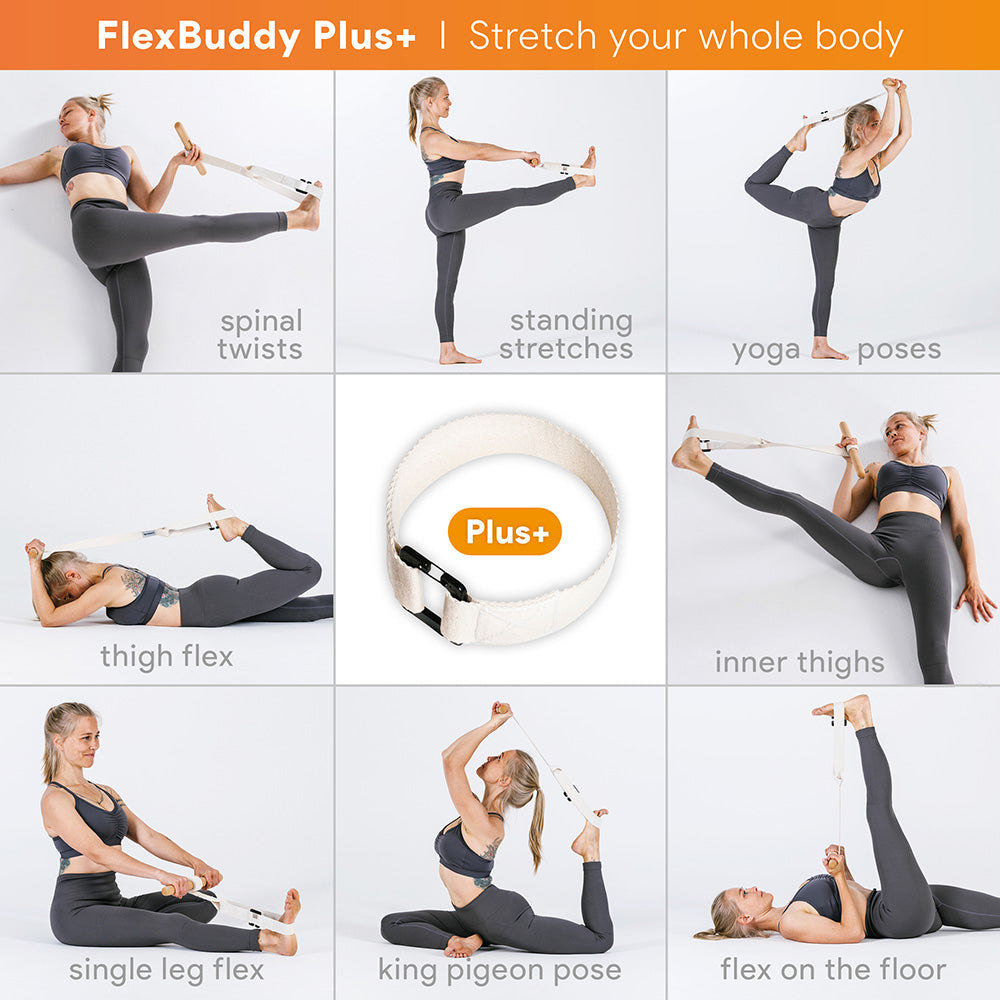
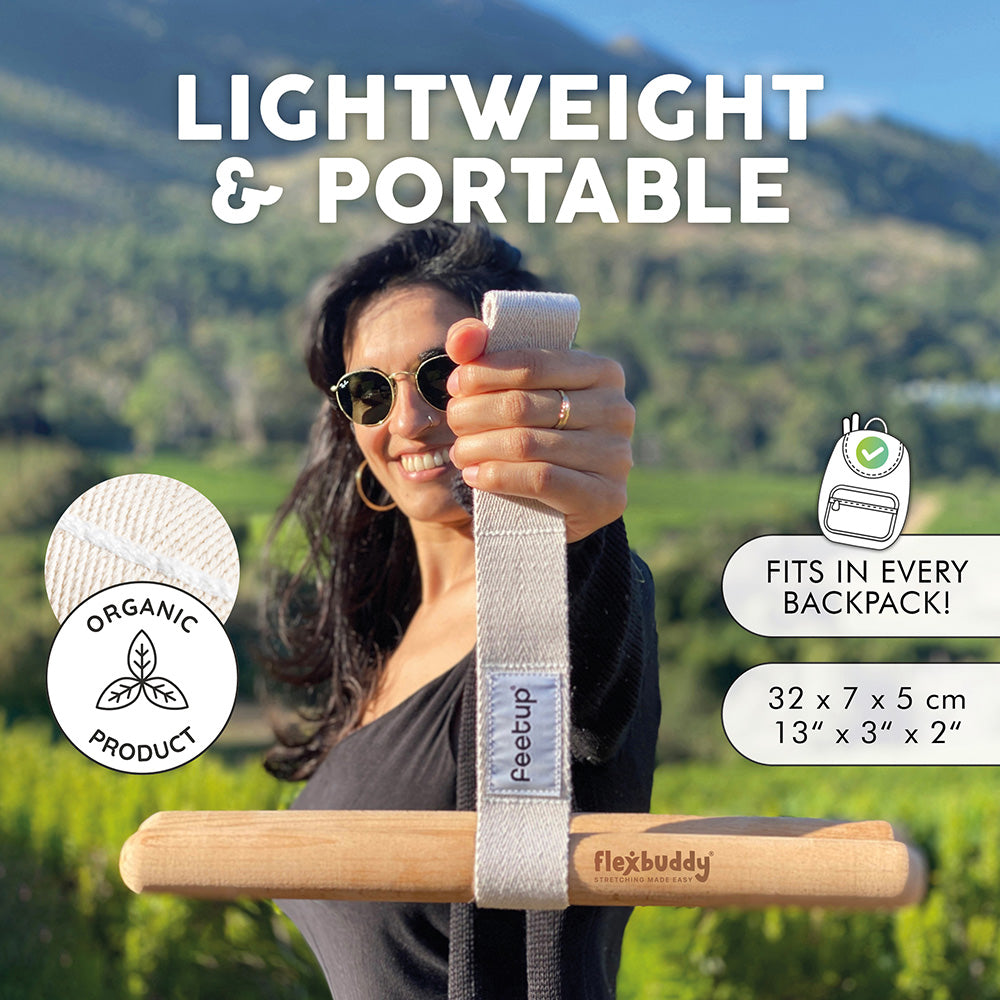
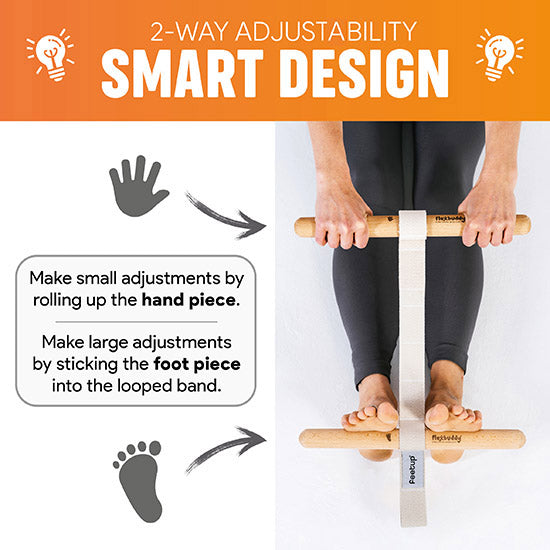
The drills free your upper back. FlexBuddy® turns the upright position into a daily habit. It is a patented stretching device made of two beech-wood bars joined by an adjustable cotton strap: one bar under the soles of your feet, one in your hands. Its basic posture is what this article is about: sit straight, lean back, tilt the hips forward, shoulders down, chest lifted, head up, arms straight. Hold that chest lift for ten deep breaths and you are practising upper-back extension with something to pull against, while your hamstrings and calves stretch too. Its Stretching Guide adds Cat-Cow in the basic posture, the Shoulder Opener, and the Twisted Boat (Parivrtta Navasana), a balance with a turn through the upper back.
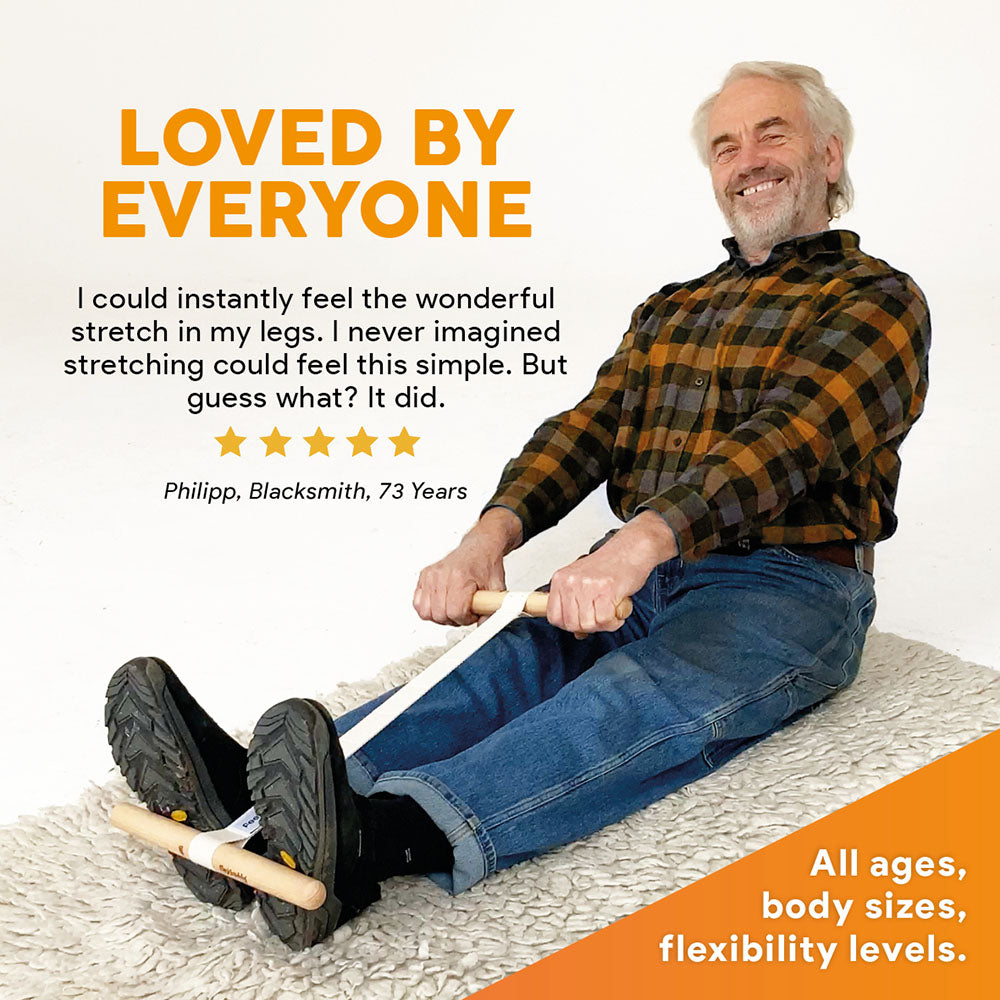
Two minutes a day can improve your flexibility and posture. "Such an excellent yoga prop. I use it in my classes," wrote yoga teacher Lynne G. FlexBuddy is rated 4.5 by verified buyers and comes with a 30-day money-back guarantee and a lifetime warranty, so you can try it without risk. Get your FlexBuddy, or take the two-minute quiz to find the routine for your kind of stiffness.
Frequently asked questions
How do I improve my thoracic spine mobility?
Move it through rotation and extension several times a week: Cat-Cow, thread the needle, open book, towel extension, seated rotation, wall angels. Add upper-back strength work, which pooled trials show has a large effect on the curve itself [17], and practise sitting tall every day, which is what FlexBuddy's basic posture is for.
What causes a stiff thoracic spine?
Not using the range you have, which is why it responds so well to movement. Long sitting combined with little exercise is linked with less thoracic rotation [4], the upper-back curve deepens with age [9], and standing and sitting use less extension than the spine has available [3].
How long does it take to improve thoracic mobility?
You will feel freer straight after a session. The studies that measured change got results in four to eight weeks [12][16], and six months of strengthening reduced the resting curve of the upper back in adults over 60 [20].
Is foam rolling good for the thoracic spine?
Yes. It is a comfortable way to practise extension. Foam rolling improves range of motion immediately [15], and eight weeks of daily roller exercises improved overhead reach in older women [16]. Avoid it if you have osteoporosis.
Can a stiff upper back cause neck pain?
The two go together: people with neck pain show reduced thoracic mobility [6]. And the upper back is a good place to work: in pooled trials, thoracic manipulation by a therapist reduced neck pain in the short term [11]. Start with the six drills.
How do I stretch my upper back at my desk?
Sit tall, cross your arms and rotate each way for three breaths, five times per side. Then, hands behind your head, lean your upper back over the top of the chair back for five slow breaths, twice.
This article is general information, not medical advice. A stiff upper back usually responds well to regular movement. If your pain is sharp, comes with chest pain, breathlessness, numbness, weakness, fever, bladder or bowel changes, follows an injury, wakes you at night or keeps getting worse, see a doctor or physiotherapist before you stretch [8].
References
- Jones O. The Thoracic Spine. TeachMeAnatomy. Last updated 12 Feb 2026. https://teachmeanatomy.info/thorax/bones/thoracic-spine/ (accessed 10 Nov 2026).
- Fujimori T, Iwasaki M, Nagamoto Y, et al. Kinematics of the thoracic spine in trunk rotation: in vivo 3-dimensional analysis. Spine (Phila Pa 1976). 2012;37(21):E1318–E1328. doi:10.1097/BRS.0b013e318267254b. PMID 22772578 (abstract accessed 10 Nov 2026).
- Edmondston SJ, Waller R, Vallin P, Holthe A, Noebauer A, King E. Thoracic spine extension mobility in young adults: influence of subject position and spinal curvature. J Orthop Sports Phys Ther. 2011;41(4):266–273. doi:10.2519/jospt.2011.3456. PMID 21335925 (abstract accessed 10 Nov 2026).
- Heneghan NR, Baker G, Thomas K, Falla D, Rushton A. What is the effect of prolonged sitting and physical activity on thoracic spine mobility? An observational study of young adults in a UK university setting. BMJ Open. 2018;8(5):e019371. doi:10.1136/bmjopen-2017-019371. PMID 29730619 / PMC5942425 (full text accessed 10 Nov 2026).
- Barrett E, O'Keeffe M, O'Sullivan K, Lewis J, McCreesh K. Is thoracic spine posture associated with shoulder pain, range of motion and function? A systematic review. Man Ther. 2016;26:38–46. doi:10.1016/j.math.2016.07.008. PMID 27475532 (abstract accessed 10 Nov 2026).
- Joshi S, Balthillaya G, Neelapala YVR. Thoracic posture and mobility in mechanical neck pain population: a review of the literature. Asian Spine J. 2019;13(5):849–860. doi:10.31616/asj.2018.0302. PMID 31154701 / PMC6773982 (full text accessed 10 Nov 2026).
- Garber CE, Blissmer B, Deschenes MR, et al.; American College of Sports Medicine. Position stand: quantity and quality of exercise for developing and maintaining cardiorespiratory, musculoskeletal, and neuromotor fitness in apparently healthy adults. Med Sci Sports Exerc. 2011;43(7):1334–1359. doi:10.1249/MSS.0b013e318213fefb. PMID 21694556 (abstract accessed 10 Nov 2026).
- NHS. Back pain. Page last reviewed 5 March 2026. https://www.nhs.uk/conditions/back-pain/ (accessed 10 Nov 2026).
- Zappalá M, Lightbourne S, Heneghan NR. The relationship between thoracic kyphosis and age, and normative values across age groups: a systematic review of healthy adults. J Orthop Surg Res. 2021;16(1):447. doi:10.1186/s13018-021-02592-2. PMID 34243795 / PMC8268398 (abstract accessed 10 Nov 2026).
- Edmondston SJ, Ferguson A, Ippersiel P, Ronningen L, Sodeland S, Barclay L. Clinical and radiological investigation of thoracic spine extension motion during bilateral arm elevation. J Orthop Sports Phys Ther. 2012;42(10):861–869. doi:10.2519/jospt.2012.4164. PMID 22523094 (abstract accessed 10 Nov 2026).
- Masaracchio M, Kirker K, States R, Hanney WJ, Liu X, Kolber M. Thoracic spine manipulation for the management of mechanical neck pain: a systematic review and meta-analysis. PLoS One. 2019;14(2):e0211877. doi:10.1371/journal.pone.0211877. PMID 30759118 / PMC6373960 (abstract accessed 10 Nov 2026).
- Cho J, Lee E, Lee S. Upper thoracic spine mobilization and mobility exercise versus upper cervical spine mobilization and stabilization exercise in individuals with forward head posture: a randomized clinical trial. BMC Musculoskelet Disord. 2017;18(1):525. doi:10.1186/s12891-017-1889-2. PMID 29233164 / PMC5727966 (full text accessed 10 Nov 2026).
- Johnson KD, Kim KM, Yu BK, Saliba SA, Grindstaff TL. Reliability of thoracic spine rotation range-of-motion measurements in healthy adults. J Athl Train. 2012;47(1):52–60. doi:10.4085/1062-6050-47.1.52. PMID 22488230 / PMC3418115 (abstract accessed 10 Nov 2026).
- Edmondston SJ, Christensen MM, Keller S, Steigen LB, Barclay L. Functional radiographic analysis of thoracic spine extension motion in asymptomatic men. J Manipulative Physiol Ther. 2012;35(3):203–208. doi:10.1016/j.jmpt.2012.01.008. PMID 22386914 (abstract accessed 10 Nov 2026).
- Wilke J, Müller AL, Giesche F, Power G, Ahmedi H, Behm DG. Acute effects of foam rolling on range of motion in healthy adults: a systematic review with multilevel meta-analysis. Sports Med. 2020;50(2):387–402. doi:10.1007/s40279-019-01205-7. PMID 31628662 (abstract accessed 10 Nov 2026).
- Treacy JM, Ostrem JD, Davies BL. Improved shoulder flexion in older females following an 8-week daily exercise program on a 36-inch foam roller. J Bodyw Mov Ther. 2025;44:714–719. doi:10.1016/j.jbmt.2025.06.028. PMID 40954650 (abstract accessed 10 Nov 2026).
- González-Gálvez N, Gea-García GM, Marcos-Pardo PJ. Effects of exercise programs on kyphosis and lordosis angle: a systematic review and meta-analysis. PLoS One. 2019;14(4):e0216180. doi:10.1371/journal.pone.0216180. PMID 31034509 / PMC6488071 (abstract accessed 10 Nov 2026).
- Lin F, Parthasarathy S, Taylor SJ, Pucci D, Hendrix RW, Makhsous M. Effect of different sitting postures on lung capacity, expiratory flow, and lumbar lordosis. Arch Phys Med Rehabil. 2006;87(4):504–509. doi:10.1016/j.apmr.2005.11.031. PMID 16571389 (abstract accessed 10 Nov 2026).
- McDonnell LK, Hume PA, Nolte V. Rib stress fractures among rowers: definition, epidemiology, mechanisms, risk factors and effectiveness of injury prevention strategies. Sports Med. 2011;41(11):883–901. doi:10.2165/11593170-000000000-00000. PMID 21985212 (abstract accessed 10 Nov 2026).
- Katzman WB, Vittinghoff E, Lin F, et al. Targeted spine strengthening exercise and posture training program to reduce hyperkyphosis in older adults: results from the study of hyperkyphosis, exercise, and function (SHEAF) randomized controlled trial. Osteoporos Int. 2017;28(10):2831–2841. doi:10.1007/s00198-017-4109-x. PMID 28689306 / PMC5873977 (abstract accessed 10 Nov 2026).
- Briggs AM, Smith AJ, Straker LM, Bragge P. Thoracic spine pain in the general population: prevalence, incidence and associated factors in children, adolescents and adults. A systematic review. BMC Musculoskelet Disord. 2009;10:77. doi:10.1186/1471-2474-10-77. PMID 19563667 / PMC2720379 (abstract accessed 10 Nov 2026).
- NHS. Chest pain. Page last reviewed 8 August 2023. https://www.nhs.uk/symptoms/chest-pain/ (accessed 10 Nov 2026).
- NHS. Osteoporosis. Page last reviewed 29 October 2026. https://www.nhs.uk/conditions/osteoporosis/ (accessed 10 Nov 2026).
- Katzman WB, Wanek L, Shepherd JA, Sellmeyer DE. Age-related hyperkyphosis: its causes, consequences, and management. J Orthop Sports Phys Ther. 2010;40(6):352–360. doi:10.2519/jospt.2010.3099. PMID 20511692 / PMC2907357 (full text accessed 10 Nov 2026).